The Godox C100 is the weirdest camera and the weirdest light meter I've ever used — it's an intriguing concept, but it misses the mark on both counts
Godox C100: two-minute review Well, this is a new one.
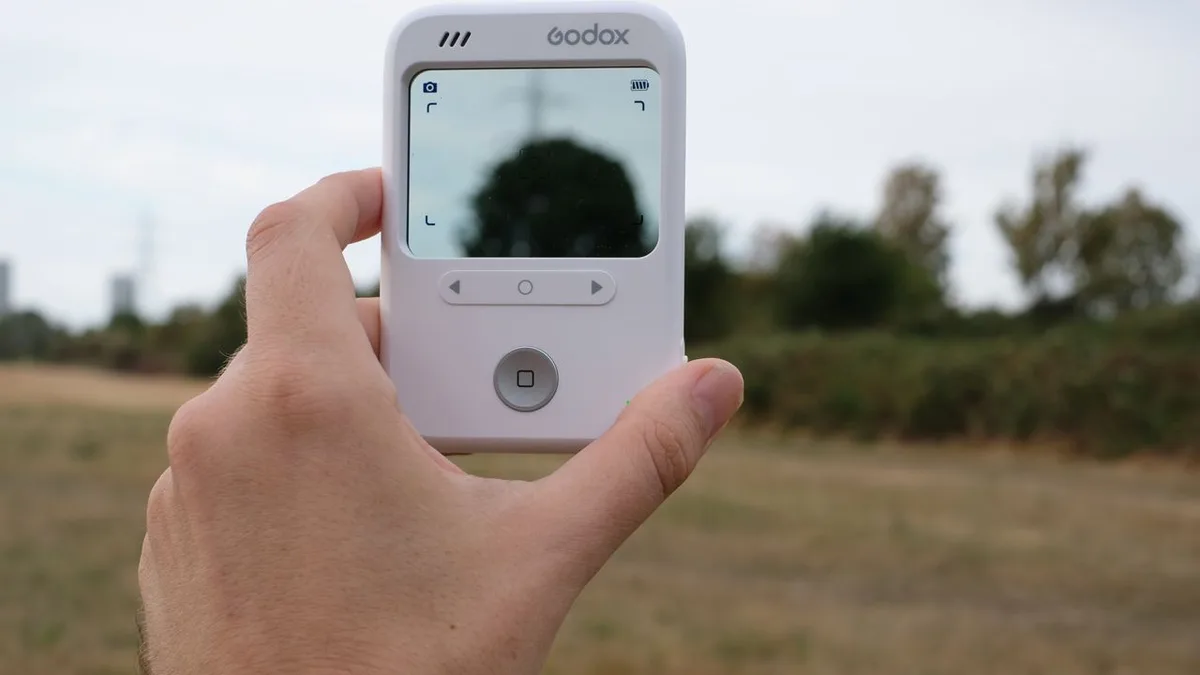
Godox caught everybody by surprise when it announced the C100, a slim, rectangular point-and-shoot camera built around a transparent rectangular screen that also functioned as the viewfinder… and it also worked as a light meter for film photography.
What, many asked camera nerds, was going on here? Having now used the Godox C100 for myself, it remains to me a borderline inexplicable release, two devices wrapped in one very unusual shell.
I did not hate using it.
But I did find myself returning again and again to niggling questions like, ‘Who is this for?’, ‘What is the point of this?’, and I still don’t think I can answer them.
The sleek, sci-fi design of the Godox C100 is what got a lot of people excited on the camera’s announcement, and let’s start there since it’s an excuse to be positive.
This is a cool-looking object – there’s no denying that.
While I was testing the C100, the design received admiring compliments from friends and strangers alike — a common refrain was that it looked like something out of Star Trek .
The transparent screen/viewfinder is exciting to use, in concept at least, and it’s a fun camera to slip in and out of a pocket for quick grab-shots.
But you’ll have noted that I said ‘in concept’.
Once you actually start using the thing — in my view, it doesn't quite work.
There’s nowhere that’s comfortable to hold the camera and keep both the subject and the frame lines in view; you find your eyes flicking from one to the other like a hunting autofocus system.
And besides, unless you hold the camera quite close to your eyes (which I did end up doing), from your perspective, the frame lines aren’t going to particularly correspond to what ends up being captured.
In terms of image quality, I thought the Godox C100 was more or less decent for a camera of its type.
5News aggregated this summary from the outlet’s public feed. The full article, with all the context, is on www.techradar.com — the content belongs to TechRadar.