Margaret Hamilton, software pioneer who helped put humans on the Moon, dies at 90
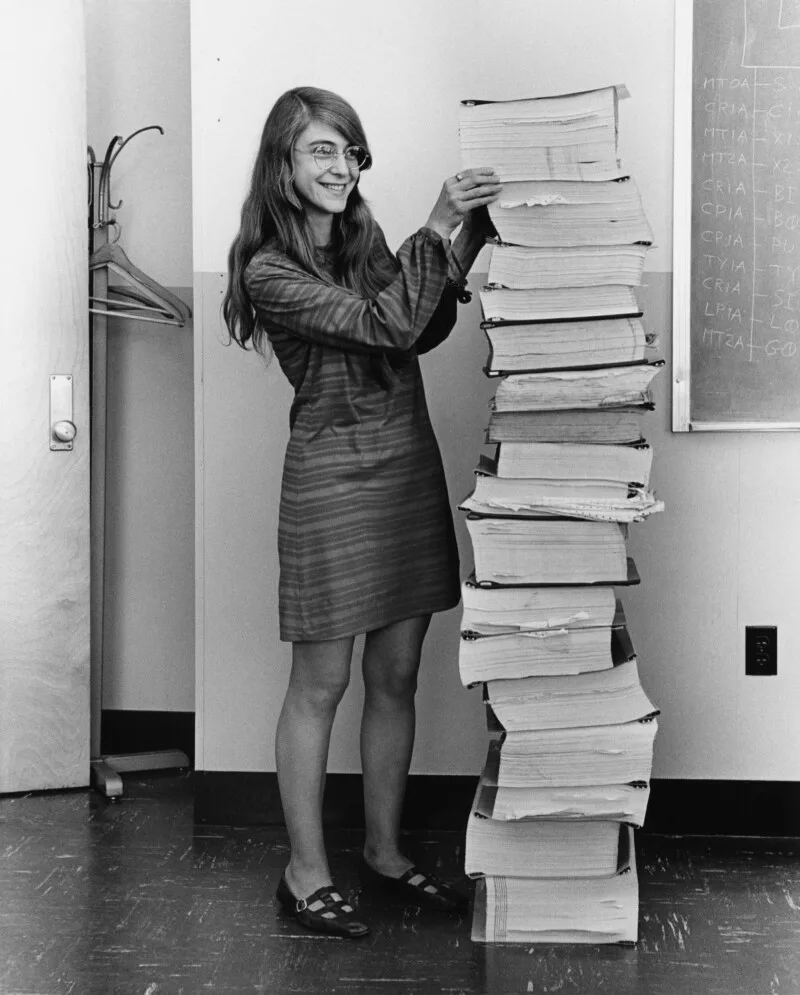
"Forget It" was the name of a small computer program never thought to be needed, which will nonetheless go down in history along with its author, Margaret Hamilton, the American software engineer who died on September 30, aged 90.
Hamilton led development of the onboard flight software for Apollo's command and lunar modules, helping astronauts reach the Moon in 1969.
Among her early jobs after joining the MIT Instrumentation Laboratory in 1965 was to write the software for the Apollo abort procedure.
"Everybody said that was never going to happen, [so they said] 'Oh well, good.
We'll give this one to Margaret because she's a beginner,'" she told the Computer History Museum.
However, an unmanned flight did abort, raising Hamilton's standing within the team.
"It went to [run] this program I had written, which I named Forget It.
All of a sudden, I became an overnight expert," she said.
Hamilton was born in Paoli, Indiana.
Moving with her family to Michigan, she graduated from high school in 1954.
She studied mathematics at the University of Michigan and Earlham College, where she graduated in 1958 with a minor in philosophy.
She planned to pursue graduate studies and an academic career, but decided to go to Boston in 1959 with her husband, who was studying law at Harvard.
She got a job at MIT with Edward Lorenz – who went on to pioneer chaos theory – and programmed the LGP-30 and DEC's PDP-1 computers for weather forecasting.
She worked on other projects at MIT, including aerospace systems, before hearing of the Apollo missions in 1965.
5News aggregated this summary from the outlet’s public feed. The full article, with all the context, is on www.theregister.com — the content belongs to The Register.