Former Pussy Riot member reveals she was recruited by Russia’s security service to spy on activists
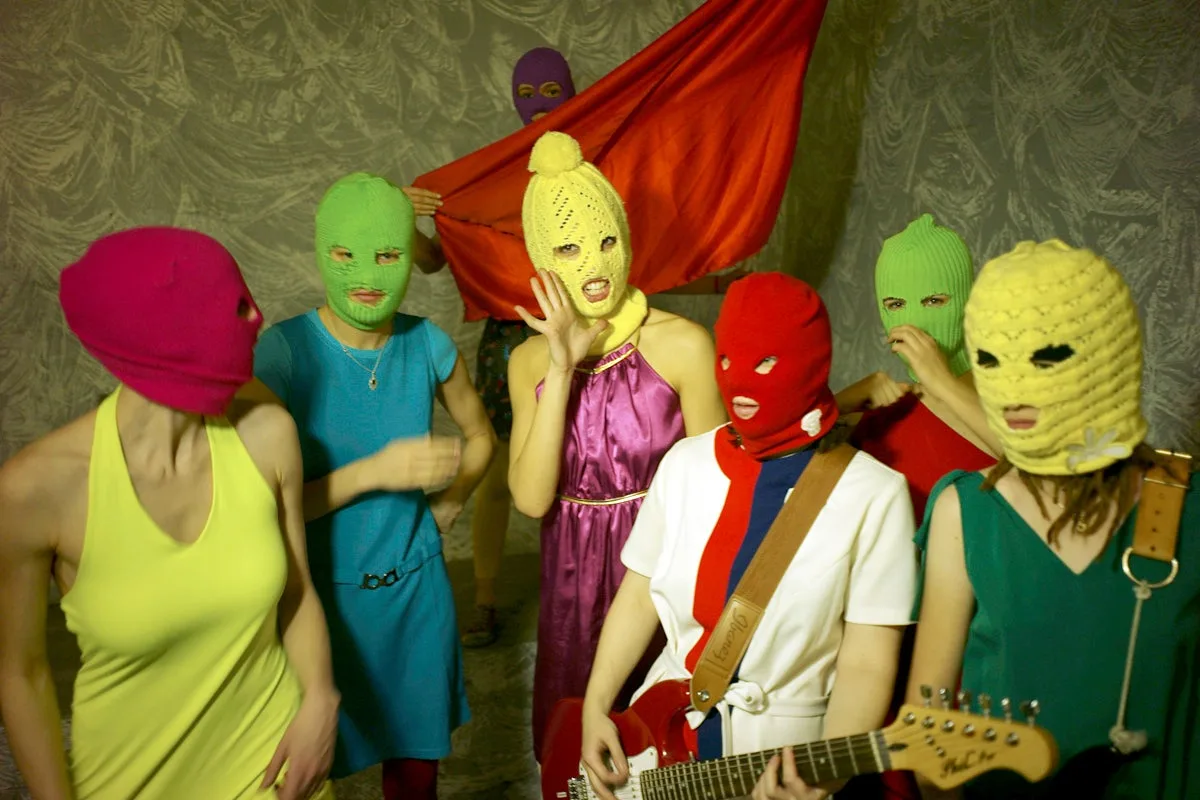
A former member of Russian protest group Pussy Riot has revealed she was recruited to join Russia’s security service to inform on other activists.
Margarita Konovalova, one of the 15 women who started the feminist collective in 2011, was jailed in 2020 for staging an anti-police brutality protest near the Kremlin. The group became known for their criticism of Vladimir Putin and wearing colourful balaclavas during stunts.
But Konovalova has now admitted she spent the last three years passing information on artists and anti-war activists to the FSB security service, fearing that her relatives would be killed otherwise, The Insider reported.
In an interview with lawyer Dmitry Zakhvatov, who helped her escape Russia, Konovalova recalled how she was given the codename “Harley” and a phone number to contact her handler.
She was required to gather information about persons of interest - their social circles, relatives, habits, and vulnerabilities, including drug use, infidelity, and mental state to be used as blackmail - but she claimed that she tried to sabotage the cases.
Among the people she was required to spy on, Konovalova named street artist Philipp Kozlov, known as Philippenzo, performance artist Pavel Krisevich as well as fellow Pussy Riot member Maria Alyokhina.
“She tried to weave around in every possible way,” Zakhvatov told the media outlet. “Sometimes she succeeded, sometimes she didn't. But, fortunately, there were no injuries.”
In the summer of 2025, Konovalova claimed that FSB officers offered her just over £11,000 to use her as bait in the kidnap and murder of Pyotr Verzilov, founder of Mediazona and co-founder of Pussy Riot with whom she had previously been in a relationship.
She was supposed to meet him in Serbia and lure him to his would-be killers, it is claimed.
Instead Konovalova contacted Zakhvatov, who has previously defended anti-war activists, including Pussy Riot members, and was himself sentenced in absentia to 21 years in a penal colony for fundraising for the Ukrainian military.
They plotted her escape from the intelligence agency's control and departure from Russia.
Neither Konovalova nor Zakhvatov divulged how they managed to take her passport from the FSB and transport her across the border.
Explaining her decision to come forward, the artist said: “There are suspected people who have also been recruited. And I'd like to help them.
“I'm a living example of how you can simply inform the right people, and they'll definitely help you.”
5News aggregated this summary from the outlet’s public feed. The full article, with all the context, is on www.independent.co.uk — the content belongs to The Independent World.