Samsung’s 'absolutely stellar' 2TB 990 Pro SSD is still just $390 at Amazon
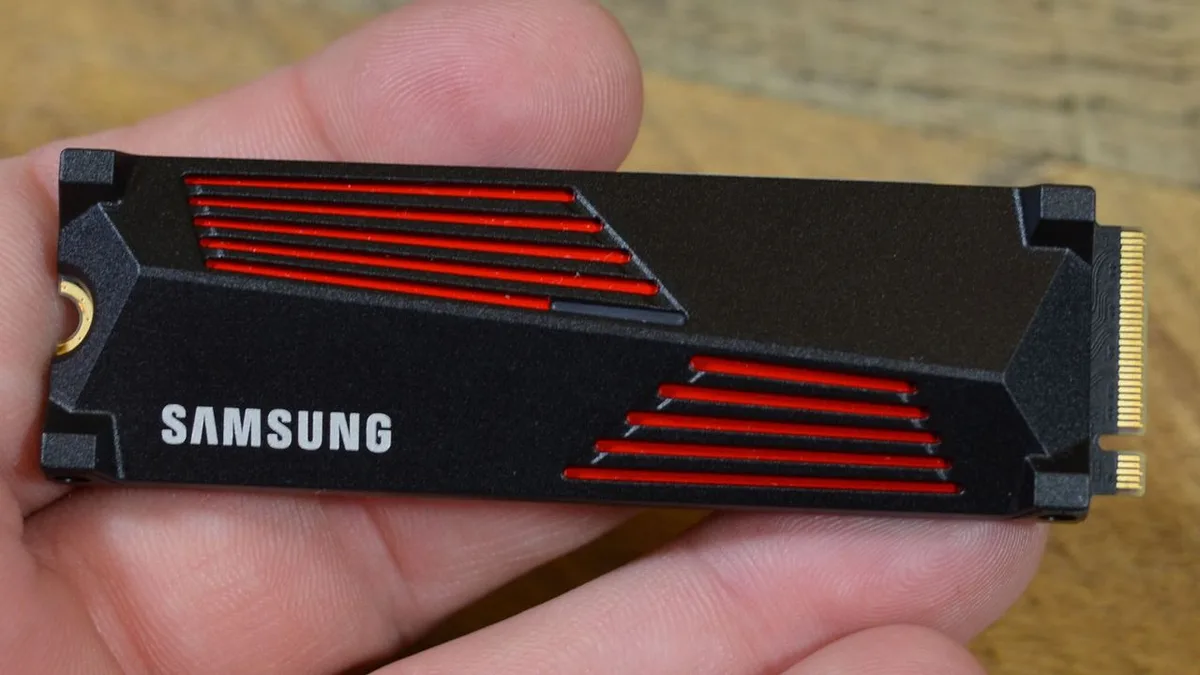
There aren't many internal SSDs that score the full five stars in our reviews, but this one did it - and smashed all our expectations in tests.
Right now, the Samsung 2TB 990 Pro SSD is at $390 (was $640) at Amazon .
That's a near record-low price for a drive that's been the default answer to “which NVMe should I buy” for the better part of two years.
And it undercuts most 1TB competitors on a per-terabyte basis.
Speaking of, both the 1TB and 4TB models are also on sale, but for my money, of the three the 2TB drive offers the best value for money.
For more demanding professional workloads, I recommend upgrading to the Samsung 9100 Pro SSD for $400 at Amazon .
SSD 990 PRO 2TB: was $639.99 now $389.99 PCIe 4.0 M.2 2280 NVMe SSD with sequential read speeds up to 7,450MB/s and write speeds up to 6,900MB/s, plus 2GB of LPDDR4 cache for sustained performance on large file transfers.
Compatible with PC, laptop, and PS5 builds that support PCIe 4.0, and backed by a five-year warranty.
View Deal Why we recommend it The 990 PRO is still one of the fastest PCIe 4.0 drives you can buy, and TechRadar's own testing backs that up.
We called it an absolutely stellar M.2 SSD for both professional users and gamers, and praised how quickly it handled large file saves in our benchmarks.
That combination of proven real-world performance and Samsung's five-year warranty is hard to match at this price.
Samsung builds its own NAND flash, DRAM cache, and controller in-house, which is part of why the 990 PRO has held its position at the top of the PCIe Gen 4 hierarchy for so long in a market where flagship drives usually get leapfrogged within 18 months.
With over 12,000 reviews and a 4.8-star average on Amazon, it's a well-proven choice for gaming rigs, content creation machines, and general-purpose PC builds alike.
Also consider 9100 Pro SSD (2TB): $399.99 If you're a professional, I recommend spending the extra $10 and grabbing the 9100 Pro.
5News aggregated this summary from the outlet’s public feed. The full article, with all the context, is on www.techradar.com — the content belongs to TechRadar.