Disembodied fruit fly brain joins the crypto speculation swarm
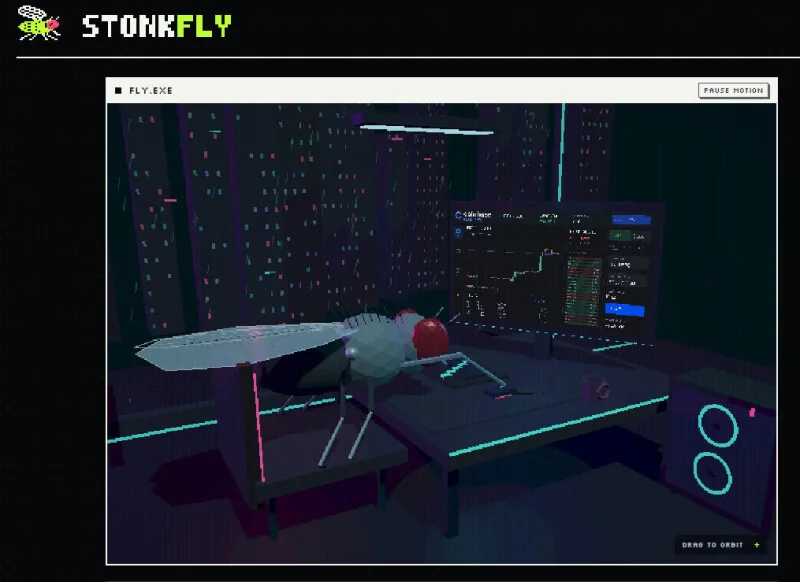
If you want to understand how 2026 is going, in March The Register reported that scientists had connected a simulated fruit fly brain to a virtual body and let it wander around a virtual world.
Now another simulated fly nervous system is trading crypto.
Behold Stonkfly, the brainchild of Coinbase software engineer Alex Wormuth.
His X post boasted: "I gave the fly brain $100 to trade bitcoin.
Dopamine neurons are stimulated when the fly makes profit.
Neuron activity controls buy/sell decisions and makes trades on coinbase.
Will the fly get rich?" Well, all we can say is Alex should question his life choices.
But really, more stupid things have happened this year, like the US president suggesting he could bring in the military to correct a misbehaving bond market.
Keen readers will recall that researchers at Eon Systems took several preexisting components: a fruit fly brain scan, a tool for modeling neurons, a model of some of the fly's muscles and body, and a very simple virtual environment.
After connecting them, the team claimed that the result displayed some of the behavior of a real insect.
Stonkfly is different.
It uses a model of a male fly's brain and ventral nerve cord, rather than the female brain scan used in the earlier experiment.
It has no body, and engineered interfaces feed it market information and translate neural activity into trading decisions.
The explanation on GitHub – it is an open source project – makes clear that the model uses engineered reinforcement signals, not modeled pain receptors, while synaptic changes "do not establish that it learns to trade profitably." The underlying network is substantial, comprising 166,700 nodes, 25,582,938 directed connections, and 124,177,617 synaptic contacts.
5News aggregated this summary from the outlet’s public feed. The full article, with all the context, is on www.theregister.com — the content belongs to The Register.