Is Italy’s Parmigiano Reggiano cheese really melting because of the heat wave? Social media claim, explained
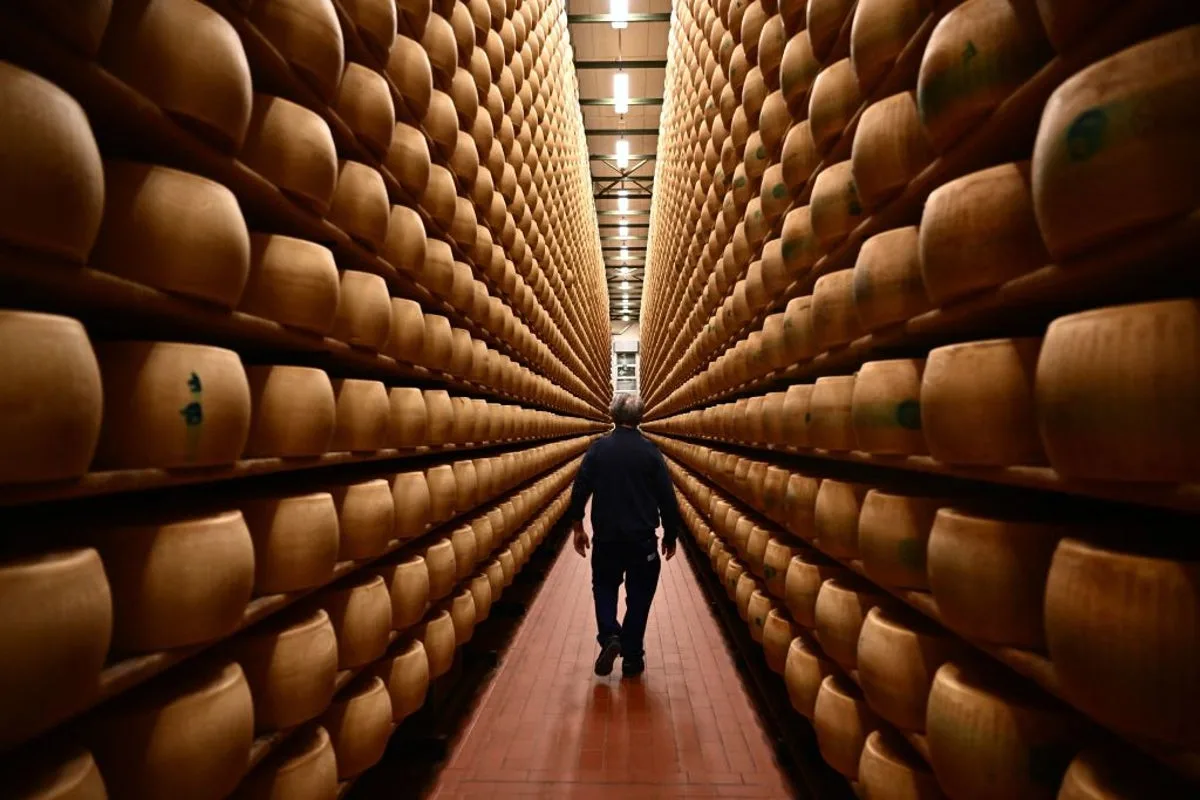
Amid a severe heatwave in Italy, exaggerated and inaccurate posts on social media have distorted the climate's effect on Parmigiano Reggiano cheese production and the financial institutions that hold the wheels as loan collateral.
Parmigiano Reggiano is crafted under precise standards within designated territories of the Emilia Romagna region in northern Italy. The milk comes strictly from dairy cows nourished on local feed, with each wheel undergoing an aging period lasting from 12 to 40 months.
To assist farmers with working capital during aging, select banks take the cheese wheels as collateral for loans. The largest facility handling this is Credito Emiliano S.p.A’s Magazini Generali delle Tagliate (MGT), which has operated since 1953.
Social media posts claimed that Italy's extreme temperatures were endangering both the traditional cheese and its primary storage bank.
A review of the facts reveals the true status of production and storage.
Claim: High temperatures have triggered a "Great Parmesan Crisis" that threatens Parmigiano Reggiano cheese and the Italian "cheese banks" storing hundreds of thousands of wheels as collateral.
The Facts : The cheese wheels are safely stored inside cooled facilities, undisturbed by the heat outside. MGT, which houses 500,000 wheels worth 300 million euros ($350 million) across two sites, confirmed its facilities are functioning as normal.
Giancarlo Ravanetti, general manager of MGT, noted that summer temperatures repeatedly approaching 40 degrees Celsius (104 degrees Fahrenheit) increased the electricity required to keep facilities cool by 30%.
However, he confirmed that MGT's operations and the stored cheese remain completely safe despite the heat.
"The warehouses have not been affected and have continued operating normally, ensuring the cheese wheels are stored and aged under optimal conditions," he said, adding that he expects no long-term problems should severe heat continue in future years.
MGT has spent several years upgrading its infrastructure for better energy efficiency. The company replaced two outdated cooling units with a high-efficiency system, enhanced building insulation, and set up rooftop solar panels across both sites to reach a 1.5 MW capacity.
The Parmigiano Reggiano consortium, the regulatory body overseeing the cheese, recognized heatwaves as a "long-standing challenge" that can suppress milk production, with "yields potentially falling by around 10%."
Even so, the group clarified in a statement that production "is not currently at risk."
The organization stressed that cows mostly consume preserved, dried feed to maintain nutrition during droughts. Furthermore, farms supplying 70% of the milk rely on fans, regulated water misting, and climate sensors to reduce heat stress, while the rest of the milk is gathered from cooler hill and mountain areas.
5News aggregated this summary from the outlet’s public feed. The full article, with all the context, is on www.independent.co.uk — the content belongs to The Independent World.