Director says Afterworld has 'some of the deepest simulation' of any Paradox strategy game — 'The idea is to drip-feed you until you're hooked'
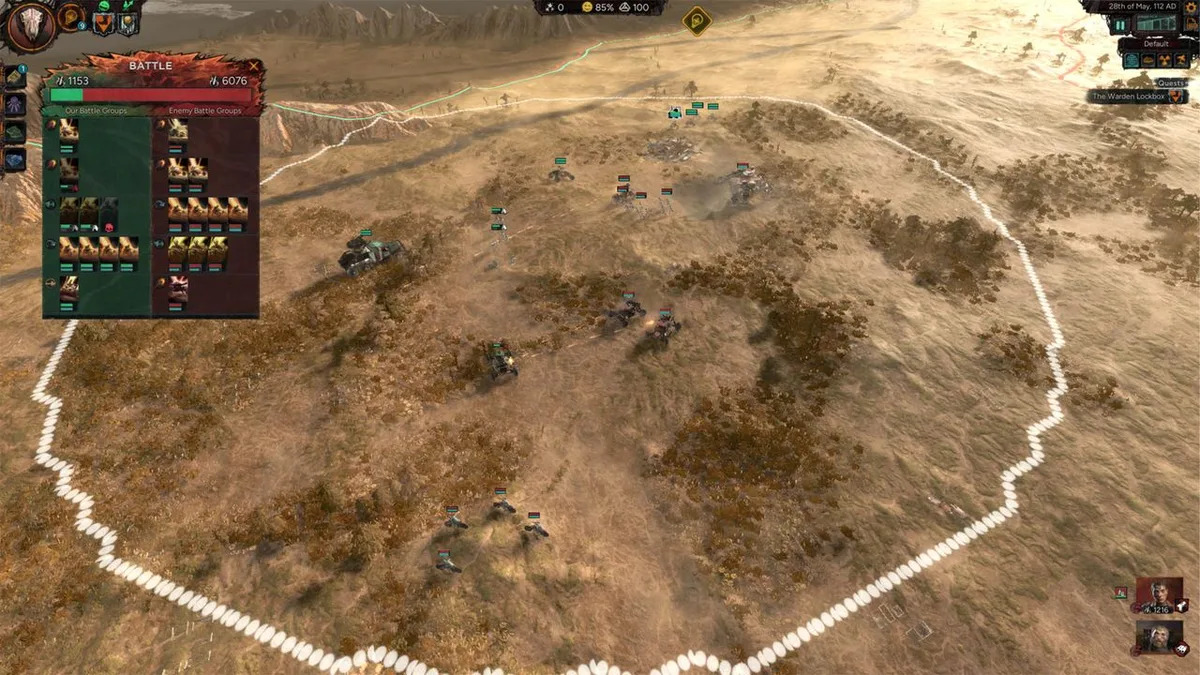
Last month I travelled to Paradox Interactive's HQ in Stockholm, Sweden, for early hands-on access to its next big grand strategy title, Afterworld, before its big reveal at Gamescom 2026 .
Set in the studio's first original setting in a decade, it takes you to a post-apocalyptic vision of North America as one of a handful of possible groups faced with rebuilding life amid the ruins or tearing what's left of society further apart.
Paradox's most popular releases truly put the 'grand' in 'grand strategy' — with the likes of World War 2 wargame Hearts of Iron 4 offering complex systems that replicate everything from economics to supply chains, unit management, politics, and diplomacy on a daunting global scale.
They give you all the tools you need for tens, hundreds, or (for some players) even thousands of hours of immersive play, but only if you're willing to overcome a steep learning curve.
Sure, the games all have tutorials, but the amount of information you're bombarded with practically necessitates at least a few hours watching explanatory YouTube videos or consulting community guides if you're new to the genre.
Slow and steady (Image credit: Paradox Interactive) With Afterworld , however, Paradox aims to make its most approachable game yet.
Even so, director Dan Lind, who previously helmed Hearts of Iron 4 , tells me that the upcoming release will still offer "some of the deepest simulation" we've seen from the studio yet.
"We're not really designing it much simpler," he adds, "it's the first game that actually has a population model that keeps track of which sex the person is and stuff like that." He explains that some higher-level systems will also track the opinions and beliefs of different groups in your growing society.
This is something players will have to manage carefully as they set out establishing cities, harvesting resources, and creating military units to defend against the many threats of the wasteland.
The difference is that Afterworld is designed to steadily introduce its mechanics rather than throw players in right at the deep end.
It's a philosophy reflected in the overall scale, with a map that's condensed down to just North America rather than the whole world.
Individual cities and units are represented in more detail than ever before.
"It lets you get closer to the ground," Lind explains.
"I can do stuff where a unit is actually [just] ten people." (Image credit: Paradox Interactive) Things start small, but the scale ramps up as you progress.
5News aggregated this summary from the outlet’s public feed. The full article, with all the context, is on www.techradar.com — the content belongs to TechRadar.