We traveled the country asking Americans how they’re feeling at the gas pump. Trump’s name came up a lot
Want to bookmark your favourite articles and stories to read or reference later? Start your Independent Membership today.
I t's easy to tune out bad news. If you don't like the headlines , put down the paper or stop scrolling. If you don't like what the anchor is saying, change the channel to one more aligned with your politics. Nearly two years into Donald Trump's second term, Americans increasingly live in bubbles of their own construction — chosen media diets, states sorted so thoroughly that one party runs most of the machinery of government.
Politicians can cherry-pick their way through the same economy: don't want to talk about interest rates, talk about unemployment; skip the jobs report and mention that the Dow is over 50,000. But there is one number few can avoid, because it's printed 20 feet high every few miles of interstate — the price of fuel.
With that in mind (and no, this isn’t the start of a bad joke), a White House reporter and an economist drove from Washington, D.C., to Oregon a week ago, filling up a 17-gallon tank as we went and asking the people we ran into along the way what they made of it.
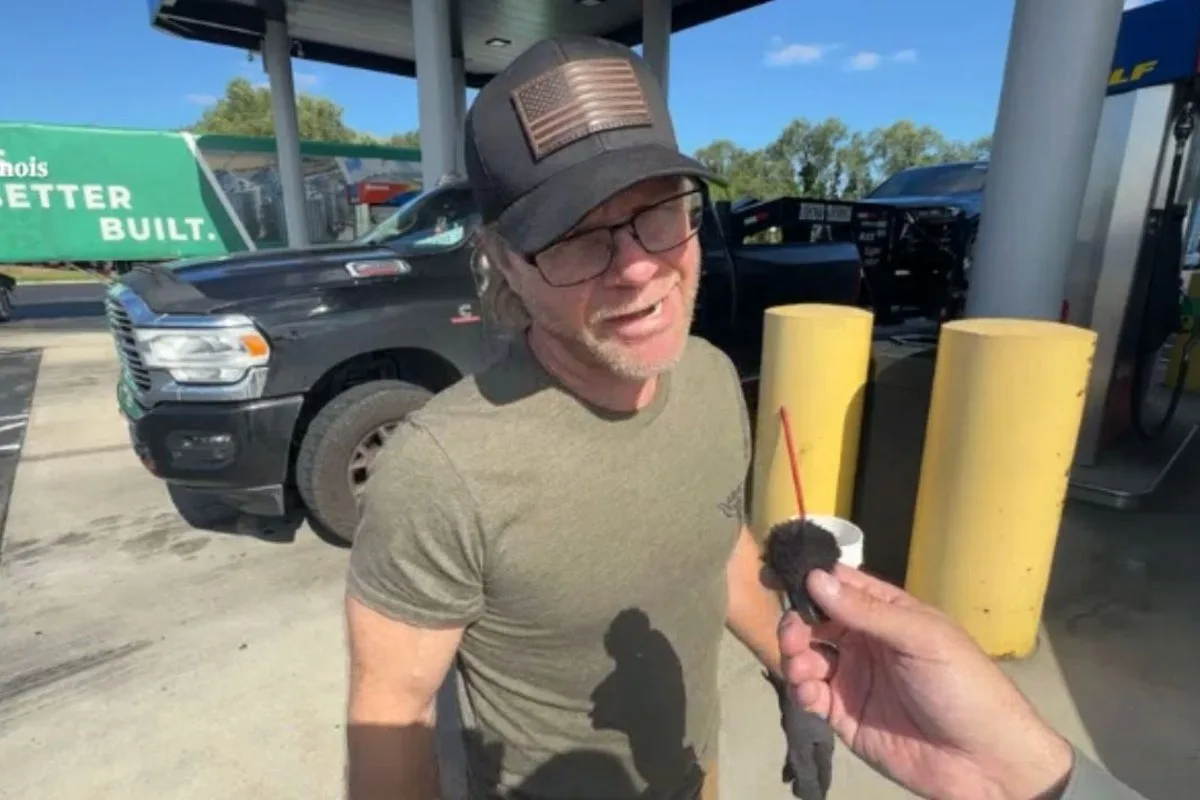
At a station in Elkhart, Indiana, a trucker named Nick White gave us the answer we'd hear in some form over and over.
“I'm willing to pay a little bit more to, uh, free the people of Iran, you know?” he said. “So if the fuel goes up a little bit, hey, it is what it is.”
White, an independent trucking owner-operator, said he’d voted for Trump in part to lower prices and to protect what he described as “our freedoms.”
But he still seemed reticent to connect Trump’s actions with the financial hit he was taking on every gallon of diesel fuel he pumped into his truck. He instead said prices would “eventually come down,” though he did not suggest when or how.
Although White described the cost of fuel as being “a little bit more” than it was before the start of the war, the price of regular unleaded was roughly 60 percent higher than it had been in February. Diesel, the fuel his livelihood runs on, had topped $7 a gallon in much of the country.
Just weeks before the first American bombs fell on Iran, drivers were paying an average of $2.94 a gallon — well below the Biden-era peak whose inflation helped return Trump to office.
Then, after Trump launched what is now a nearly eight-month-old war against Iran, the Islamic Republic responded by closing the Strait of Hormuz, choking off roughly 20 percent of the world's petroleum.
Before the war, fuel prices were something the president bragged about. After, the resulting spike supercharged inflation to levels not seen in years and pushed the Federal Reserve into raising interest rates for the first time since 2023.
At a truck stop in Portage, Wisconsin, we waited outside the convenience store for a farmer hauling a trailer full of chickens behind a diesel pickup. He came out, declined to give his name and said he'd rather not go on camera.
His assistant Brendan, left standing at the pump, was less guarded: the prices, he said, were “killing” the business and his own finances.
5News aggregated this summary from the outlet’s public feed. The full article, with all the context, is on www.independent.co.uk — the content belongs to The Independent World.