AI boom could leave an e-waste trail that wraps 6 times around Earth
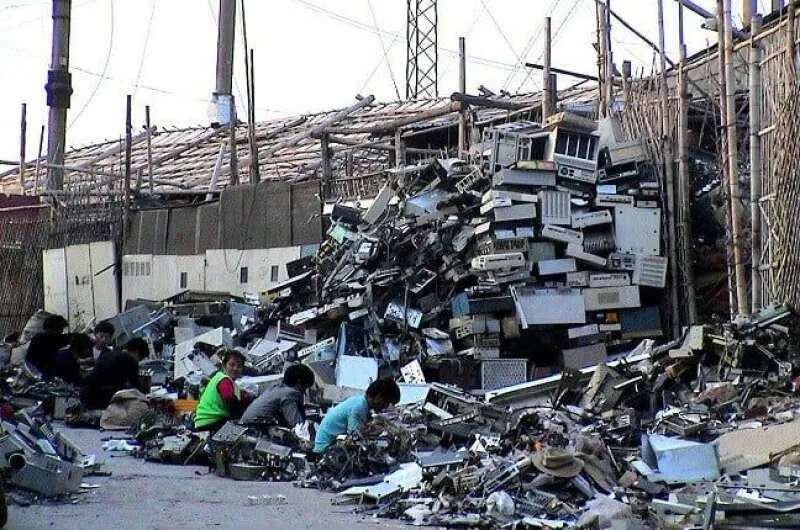
AI infrastructure could generate enough electronic waste by 2050 to fill a line of shipping containers stretching around Earth six times, according to a report that argues existing estimates drastically understate the problem.
Previous estimates have focused chiefly on servers and accelerators such as GPUs, which account for just 13 percent of a datacenter's equipment by weight, the report says.
Once power, networking, cooling, and other infrastructure are included, the total could be 40 to 60 times higher than the most widely cited academic projections.
The report identifies five equipment categories comprising networking, power distribution, backup power systems, servers plus accelerators, and cooling.
Together, these add up to about 7,000 metric tons for a reference 100 MW AI bit barn, much of which will have to be replaced when the facility is upgraded, it argues.
The report, How Big Is the AI Waste Wave? [PDF], comes from the Basel Action Network (BAN), a nonprofit organization named after the Basel Convention, which controls international movements of hazardous waste and seeks to prevent its transfer from developed to developing countries.
BAN's model starts with what the industry says it intends to build and calculates the potential waste implied by that expansion.
It estimates that AI infrastructure will generate between 395 million and 617 million tonnes of e-waste from 2025 to 2050.
The report says that would fill between 15 million and 23 million shipping containers.
Placing 20 million of them end to end would create a line about 244,000 km long, or roughly six times Earth's circumference.
The estimate rests on several assumptions.
The model supposes that the copper, steel, cooling and power distribution equipment, networking gear, and computing hardware in the latest AI datacenters will be decommissioned within years rather than decades as the technology becomes obsolete.
For example, the report says that when a facility replaces racks drawing between 5 and 15 kW with the 50-140 kW racks required for AI workloads, much of its power infrastructure must be ripped out and replaced.
A single 100 MW facility contains about 2,700 tonnes of copper in its cabling and busbars alone.
5News aggregated this summary from the outlet’s public feed. The full article, with all the context, is on www.theregister.com — the content belongs to The Register.