‘We are impatient’: meet the women protesting for change in India
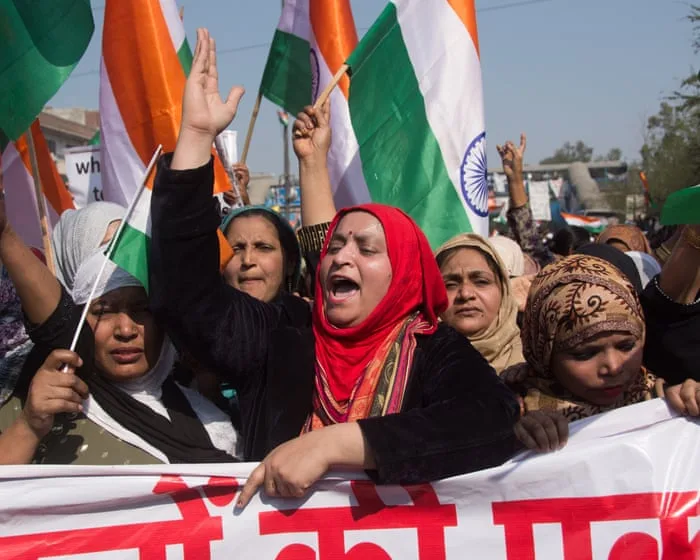
From student organisers to a model-turned-activist, these women are risking their reputations – and sometimes their lives – to fight against injustice. Plus, actor Imran Khan recommends a classic film
T here is much to be said for the extraordinary women living ordinary lives, who nonetheless shaped India. Women have changed public life in the country far more than their presence in formal politics would suggest.
And so, as India marked its 79th birthday over the weekend, I found myself reflecting on the multitude of people’s movements, big and small – as well as the women who helped shape them. During India’s struggle for freedom from British rule, women organised boycotts of British goods, made contraband salt and marched to confront the police, taking on roles usually dominated by men. In the 1970s Chipko movement, protesting deforestation, women put their bodies on the line, wrapping them around trees to stop them being felled, turning a local struggle into a national reckoning over environment and development. More recently, grandmothers in Shaheen Bagh sat to protest the citizenship law, which critics have denounced as discriminatory, creating space for dissent when many thought none existed.
Today, routes into public life for women have multiplied, with social media enabling people without political links to be in the public eye. But not all barriers have disappeared. Electoral politics remains notoriously hard to break into, especially for women. Almost half of all female parliamentarians and state legislators come from political families, while for men it is 18%, a 2025 analysis by Association for Democratic Reforms showed.
What makes a woman leading an ordinary life suddenly want to put her head above the parapet to change things for everyone? I spoke to women thrust into the spotlight in the recent student movement , who have stepped in front of vans, starved themselves and had abuse hurled at them in the process – to find out why they do it.
The president of the left wing All India Students’ Association , Bora fasted for 23 days , demanding accountability over exam paper leaks and the resignation of the Education Minister during the Cockroach Protests. Now, she is touring the country as part of a Gen Z Rising outreach campaign on education reforms.
“I am a PhD student at Jawaharlal Nehru University in theatre and performance studies. My family’s political understanding is very different from mine. I ended up joining politics because that was the only way I could make sense of the times that I was living in – to not be … completely helpless in the decisions that are made for me, that should be made by me. To have a say in what I do, how I do it and what gets done around me. What is tolerable, what is good, what is injustice – all these definitions made sense to me through politics. Theatre was the first thing that taught me that politics is not just slogans and protests. Politics is the very language in which you talk to yourselves, the thoughts you formulate in your head, the relationships you have with your friends, family and peers.
5News aggregated this summary from the outlet’s public feed. The full article, with all the context, is on www.theguardian.com — the content belongs to The Guardian UK.