The grieving family who says the coroner's courts aren't working

Sarah thought she knew what she was getting into when she attended a coroner's court in May 2024 to discuss the death of her second cousin.
Her day job as a murder detective meant she was used to courts, to judges, to legal argument. What she wasn't prepared for was a coroner's court. "I felt like I was on trial," she recalls of her first hearing, in Woking, Surrey. "I remember just feeling completely railroaded… It [was] far more hostile than I had ever expected."
Her cousin, Daniel Lindsay, died in 2023, aged 41. He had lived at a home in Surrey that specialises in caring for people with learning disabilities. Daniel also had Down Syndrome and type 1 diabetes.
As his death was unexpected, his case was referred to the coroner for an inquest.
What followed was one of the most stressful experiences of Sarah's life. She discovered new details about how her cousin lived, and his cause of death. The family initially thought Daniel died from a heart attack - but over the inquest, they learnt that was wrong. She had expected the process to be emotional; what she didn't predict was just how complex and frustrating it would be, at times leaving her tearful and furious.
Coroners examine deaths that are not straightforward, like unexpected or violent deaths, or those that take place in state custody. Every year, thousands of British families rely on these courts for crucial answers. For many, an inquest provides the key interaction with the arms of the state at a time of trauma.
But many observers, from MPs to legal experts, say the whole system is in peril. There are large backlogs in cases, as well as difficulties in carrying out post-mortems. As people live longer, caseloads are becoming more complex - but at the same time, resources are ever more limited, with little funding from government, regardless of party, say critics.
I've sat in various inquests over the last decade. In some, I couldn't hear the coroner through the noise of a busy train line, or because of poor acoustics in a vast room; in others, rooms became so hot that regular breaks were required.
"We're beyond crisis now," says Dr Georgia Richards, an epidemiologist at Kings College London who studies the prevention of future deaths. "The government really doesn't realise the impact of the broken system."
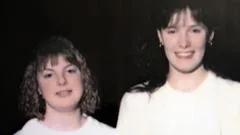
In photos of Daniel Lindsay, two things stand out: his big smile and black hair. His family say he only had three passions in life - Chelsea, TV wrestling, and trainers. Visitors who turned up at his care home in new trainers would have to take them off so Daniel could walk around with them.
Sarah and her sister, Laura Lindsay, were Daniel's next of kin and have spent the years since his death navigating the coronial system. "Every time that we end up in court it feels as though we've got another fight," says Laura.
Coroners' courts - which operate in England, Wales and Northern Ireland - set out to answer four main questions. Three of those questions – who died, where, and when - are usually quickly answered.
5News aggregated this summary from the outlet’s public feed. The full article, with all the context, is on www.bbc.co.uk — the content belongs to BBC News (Top Stories).