‘The US is now better positioned to compete’: How new drone tech tariffs are bolstering domestic production and securing supply chains
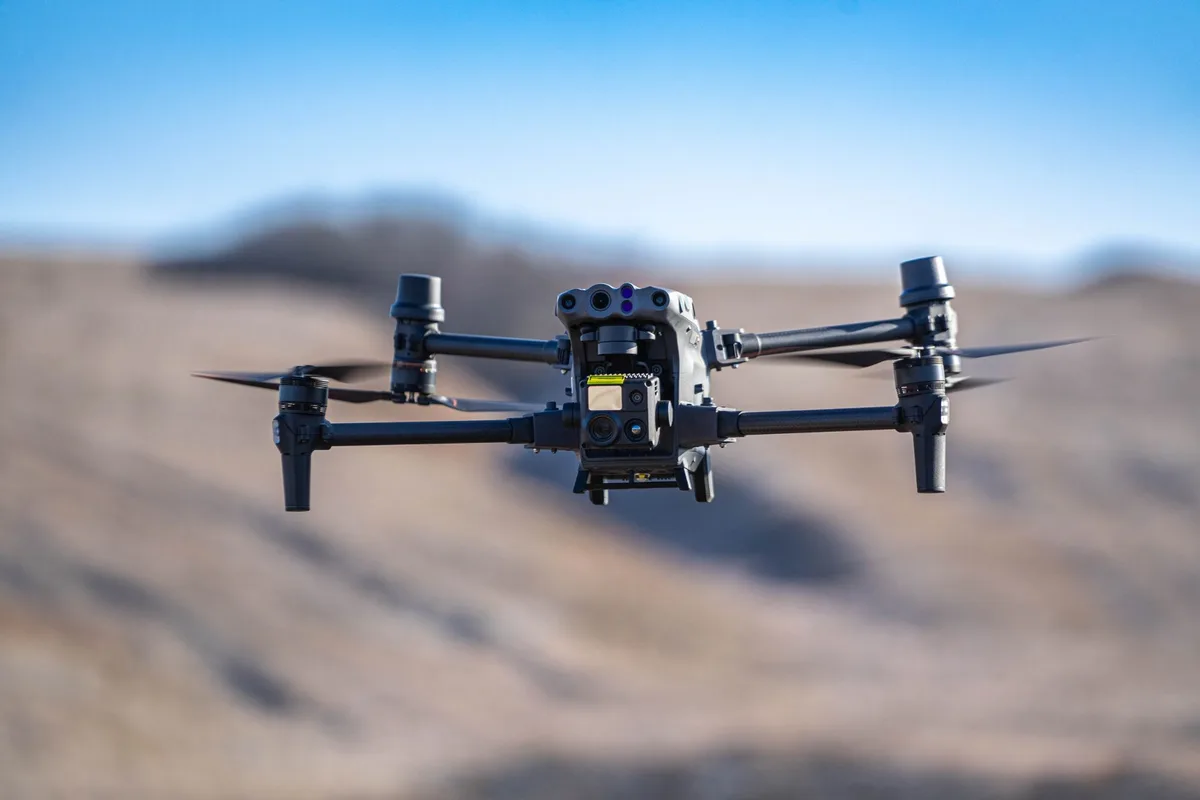
Drone technology has rapidly advanced in the last five years.
They are recording sports events, helping to track the movements of wildfires, and even delivering McDonalds.
But their rise has a far more sinister side.
As the war in Ukraine has demonstrated on sea , land , and in the air , their capacity as warfighting tools is evolving, with high-precision first-person view (FPV) drones being used for targeted strikes in warzones around the world.
But the drone industry relies heavily on Chinese hardware - with China's DJI commanding an 80% global market share - and with that comes the risk of supply chains being cut, costs increasing, or malicious software being secretly installed.
How drone tariffs address supply chain risk In an attempt to address these risks, President Trump has recently introduced sweeping tariffs on drones and drone components in an attempt to bolster domestic production and reduce the risk of supply chain disruptions.
Drones over 25 kilograms or with thermal imaging capabilities now face a 100% tariff, while those smaller in size without “certain capabilities that particularly implicate national security” face a 25% tariff.
The 25% tariff also applies to drone components.
But Trump - not wanting to strain relations with allies further than they already are - has applied a 15% tariff for drones and components from the European Union, Japan, Liechtenstein, Republic of Korea, Switzerland, and Taiwan.
The United Kingdom has also received a much more lenient tariff of just 10%.
But the question remains on how drone manufacturers in the US will adapt to increased import costs and how the tariffs will affect manufacturing while addressing the growing demand for drones from civilian, law enforcement, and military markets.
Latronix provides compute, System-on-Module platforms, and flight-ready reference designs for drones and Unmanned Autonomous Vehicles (UAVs).
I spoke to Latronix CEO Saleel Awsare to understand the challenges facing domestic component suppliers and how the tariffs will affect competition at home and abroad.
As soon as I heard of Trump’s new tariffs on foreign-made drone parts, I immediately thought of the supply chain issues the US encountered after the tariffs imposed towards the start of 2025.
5News aggregated this summary from the outlet’s public feed. The full article, with all the context, is on www.techradar.com — the content belongs to TechRadar.