US confirms it has weapons in spaaaaaace

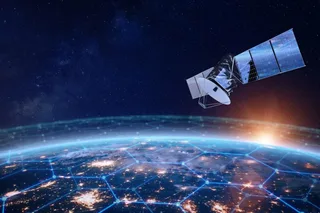
The US Space Force has deployed "space control weapons" into orbit, although it stopped short of explaining what they are and how it got there.
US Air Force Secretary Troy Meink reportedly spoke at the Air and Space Forces Association conference and said the US had deployed weaponry around Earth.
There is no word on the nature of the weaponry, nor on how and when it was launched.
There have been plenty of classified launches, and the US also has the X-37 program.
There are two uncrewed X-37B spaceplanes, which can loiter in orbit for years performing classified activities.
The Register asked officials about the weaponry, but we have not yet received a reply.
Something that could jam satellite communications is possible, or a device that could fire a pulse to disable electronics.
Another possibility is something more ballistic or kinetic, although the potential for destruction to create debris doesn't bear thinking about.
One wag on social media dubbed the consequences of an ill-thought-out ballistic weapon as "Mutually Assured Kessler Syndrome." Kessler Syndrome is a theoretical situation in which space around Earth becomes so crowded that collisions between objects cause a cascade of debris, eventually making orbital space inaccessible.
A ballistic weapon that could generate a cloud of space junk is therefore less than ideal.
The Outer Space Treaty, which forbids weapons of mass destruction in space, went into force in 1967, but the superpowers have found ways to work around it over the years.
The Soviet Union, for example, fitted Salyut 3 with a self-defense gun.
The station was launched in 1974.
There was also the US's Strategic Defense Initiative (also known as Star Wars), which was intended to be used to intercept ballistic missiles.
5News aggregated this summary from the outlet’s public feed. The full article, with all the context, is on www.theregister.com — the content belongs to The Register.