Japan killed 14,000 bears after a rise in deadly attacks on people – but will it work?
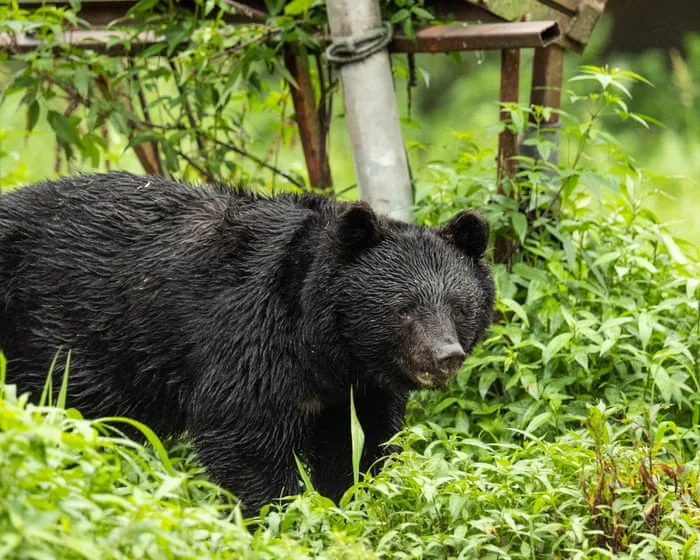
Bears killed 13 people in Japan last year, as a lack of forest foods increased conflicts. Yet some say the country’s controversial cull could threaten the endangered species
E very summer, millions of people escape the heat and humidity of Tokyo by heading to the tranquil resort town of Karuizawa in Japan’s Nagano prefecture – just an hour by bullet train from the capital. Here, at the foot of Mount Asama, visitors stroll bamboo-lined pathways, cycle in verdant highlands, and practise the wellness ritual of shinrin-yoku, bathing among the cool hinoki forests. It would be the ideal nature retreat – if it wasn’t for the bears.
From June to August, bears often move close to Karuizawa, feeding on the mulberries, ants, leaves and cherry blossoms that grow near the town. Unlike nuts, these foods are low in calories, spurring the bears to seek out further sustenance. “They’re more likely to get close to residential spaces to see what they can find,” says Amelia Hiorns, a British zoologist who previously worked with Picchio Wildlife Research Centre in the town. “This combines with the busiest season for tourists.”
Picchio, a small Japanese conservation and nature education group, has been working to improve coexistence between bears and people in Karuizawa and the surrounding region since the 1990s. Staff respond to reported bear sightings with one of their three Karelians – a dog breed trained in the western US to chase away bears. When dogs aren’t enough, the Picchio team tranquilises and relocates bears deep in the forest.
Today, Karuizawa’s approach has few parallels in Japan, as conflicts between bears and humans surge to unprecedented levels across the country.
Last year, bears attacked more than 230 people in the country, with 13 people killed , making it the deadliest year on record. Most attacks were in the mountainous northern prefectures of Akita and Iwate, where record-breaking heat affected the growth of beech nuts and acorns that bears rely on to fatten up for hibernation. Diminished human populations in Japan’s rural hinterlands, with orchards and woodlands left abandoned, exacerbated the situation as bears descended into villages in search of food.
The attacks dominated national and international news. Foreign governments – including the UK – issued travel advice warning of heightened bear risk. Insurance companies began offering specialised “bear insurance” to cover repairs to ransacked properties. Farmers installed animatronic wolves with glowing red eyes to frighten off the animals. Warning posters adorned lamp-posts. One Japanese company promoted a private bear attack shelter .
In Karuizawa, Hiroo Tamatani, the leader of Picchio’s bear team, says it has already captured 19 bears this year and responded to more than 130 sightings and incidents – up about 20% since this time last year. But there has been no rise in the actual number of bear damage incidents. After news coverage of the attacks, people are simply more aware of bears. Hiorns says: “People would be seeing little molehills in their garden and think it was bear poop … We would get calls asking if it was safe to come to Karuizawa.
5News aggregated this summary from the outlet’s public feed. The full article, with all the context, is on www.theguardian.com — the content belongs to The Guardian UK.