An Epyc trip to Venice: Everything we do and don't know about AMD's 256-core monster chip
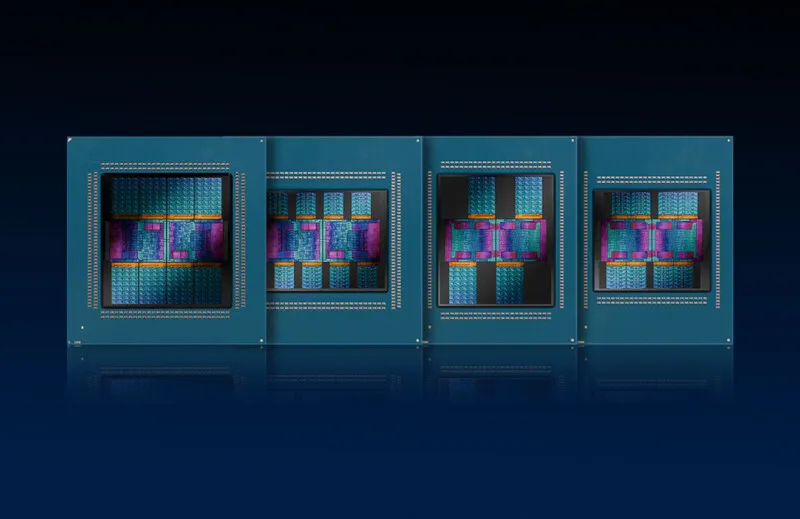
AMD's Venice Epycs mark the chipmaker's biggest architectural shift in CPU design since Rome made its debut all the way back in 2019.
What's more, AMD's Zen 6-based product stack is shaping up to be the broadest CPU portfolio ever, spanning general purpose, HPC, AI, and eventually consumer platforms.
AMD isn't quite ready to spill all the beans on its 6th-gen Zen cores, but at this point there's less we don't know about Venice than we do.
Late last week, AMD gave us a bit more to chew on with a whitepaper [PDF] clearly aimed at quashing marketing juggernaut Nvidia's narrative around its Vera CPUs.
We'll dive into the performance claims raised in the white paper in a bit, but given the piecemeal release of info on Venice up to this point, we figured it was time to take a closer look at the CPU architecture that will underpin AMD's roadmap for the next few years.
A little bit of everything Broadly speaking, AMD's 6th-gen lineup can be broken down into four buckets — high-performance, enterprise, HPC, and AI — each with its own quirks.
We'll kick things off with AMD's performance-optimized parts because those are the ones that will actually ship in 2026.
Pretty much everything else will be rolling out over the course of 2027.
The Epyc 9006 SP7 platform is what AMD has really been talking about for the past year.
It's the one that'll offer up to 256 cores, 16 channels of DDR5, and 128 lanes of speedy CXL 3.1-compatible PCIe 6.0 connectivity.
But those are just the headline specs and just like last year's Turin parts, Venice will actually come in two distinct flavors: density-optimized and frequency-optimized parts.
The 256-core version, if you hadn't already guessed, is the density optimized part.
Alongside it, AMD has a 96-core part capable of boosting to 5 GHz in the works.
Peeling back the heat spreader, we see how AMD has managed this.
5News aggregated this summary from the outlet’s public feed. The full article, with all the context, is on www.theregister.com — the content belongs to The Register.