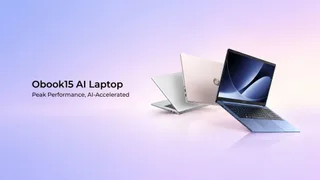
HP has a solution to expensive AI tokens: Buy a more expensive PC

HP reckons enterprises fretting about the spiraling cost of AI tokens have an obvious alternative: run the models locally and spend the money on a more expensive PC instead.
The pitch emerged during HP's third-quarter earnings call on Wednesday, where executives repeatedly pointed to cloud AI costs as one reason customers are buying higher-spec machines that can do more AI work locally.
AI PCs are becoming harder to avoid as HP pushes more of its lineup upmarket, but the company insists customers are getting something for the extra cash.
"Clearly, the AI PCs are now providing more value than what it was last year," said Ketan Patel, president of HP's Personal Systems business.
"Clearly, as the workloads are coming from cloud to the device, it is adding significant value for our customers, especially on token economics, which is a big topic right now, as you start deploying workloads in a customer environment." Patel also pointed to keeping sensitive data closer to where it is generated, reduced dependence on network connectivity, and faster response times as reasons to run AI locally.
HP says it is already seeing customers use the machines for employee productivity, engineering and design, customer service, and predictive maintenance.
The token issue came up again later in the earnings call, when HP was asked whether enterprises were looking at AI PCs specifically to get models off the internet and avoid cloud charges.
"Yes, there are two meaningful conversations which are going on right now," Patel replied.
The first, he said, was "this increasing cost of token and how bringing models locally on the edge can help them optimize cost." The second was how enterprises securely govern the growing number of AI agents wandering around their environments.
All of this is rather convenient for HP, since AI PCs cost more and, by the company's own admission, are good for its margins.
AI PCs made up 46 percent of HP's PC mix during the quarter, and the company expects that to rise to between 60 and 70 percent in fiscal 2027 and more than 70 percent in 2028.
Patel said the shift would be "margin accretive," while interim CEO Bruce Broussard noted that AI PCs come at "premium pricing" and give HP opportunities to pile additional services and security products on top, making them "more valuable to the customer and frankly, more valuable to us." The effect is already showing up in HP's numbers.
Personal Systems revenue jumped 18 percent year over year to $11.8 billion even though PC volumes fell 16 percent.
HP attributed that seemingly improbable combination to higher prices, a richer mix of premium machines and AI PCs, and sales of attached services and peripherals.
5News aggregated this summary from the outlet’s public feed. The full article, with all the context, is on www.theregister.com — the content belongs to The Register.