Ending rough sleeping is 'not just a housing issue'
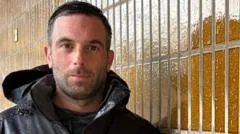
Bill Lewis describes life on the streets as lonely, destitute and tough.
That is, in part, why he is sceptical about whether the prime minister will succeed in ending rough sleeping.
Andy Burnham's "national drive" to stop people living in tents or shop doorways will include offering them "a route off the streets by Christmas".
Ministers have also pledged extra support beyond housing. But will that be enough?
"Getting everybody off the street – great, it's fine – but the problems don't end there."
Lewis, then 34, was living on the streets during the winter of 2017, when Harlow in Essex was hit by snowstorms.
He had become homeless at the end of October and was living in a tent in gardens near St Paul's church in the town centre.
"I was using the cocaine to get me through the shift and then I wasn't sleeping during the day.
With the help of charity Streets2Homes, which works with people experiencing homelessness in Harlow, he managed to get briefly off the streets by mid-December.
But on New Year's Eve, he says he "relapsed on the drugs" and "spent the next three months getting wasted".
He was back on the streets between March and July 2018, packing up his tent each night and moving from pitch to pitch.
He started volunteering for Streets2Homes and now works for the organisation as an outreach project worker, trying to help those experiencing what he went through.
Lewis, now 43, credits the charity and religion for keeping him off the streets and clear of drugs.
He says he and his colleagues are finding more people with very high and complex needs.
5News aggregated this summary from the outlet’s public feed. The full article, with all the context, is on www.bbc.co.uk — the content belongs to BBC News Business.