‘Silent Hill: Townfall’ review: like a folk-horror sequel to ‘Alien: Isolation’
W e may pull ourselves from the ocean onto a deserted dock, not knowing where we are, who we are or why there’s an IV drip of strange black fluid in the back of our hand, but Silent Hill: Townfall still feels very much like a homecoming.
Read more: The biggest video game concerts you can’t miss in 2026 After a sojourn into the myths and architecture of rural Japan on last year’s Silent Hill f , the franchise is called back to the West, although not as far as the rigid blocks of smalltown USA that it’s trudged so many times before.
This time our bewildered amnesiac hero, Simon Ordell, finds himself mysteriously summoned to the remote Scottish island of St Amelia, recently mourning a local tragedy and now mist-shrouded and abandoned.
Although, to be fair, most remote British villages feel like this after 5pm on weekdays.
Except here, the phone boxes work.
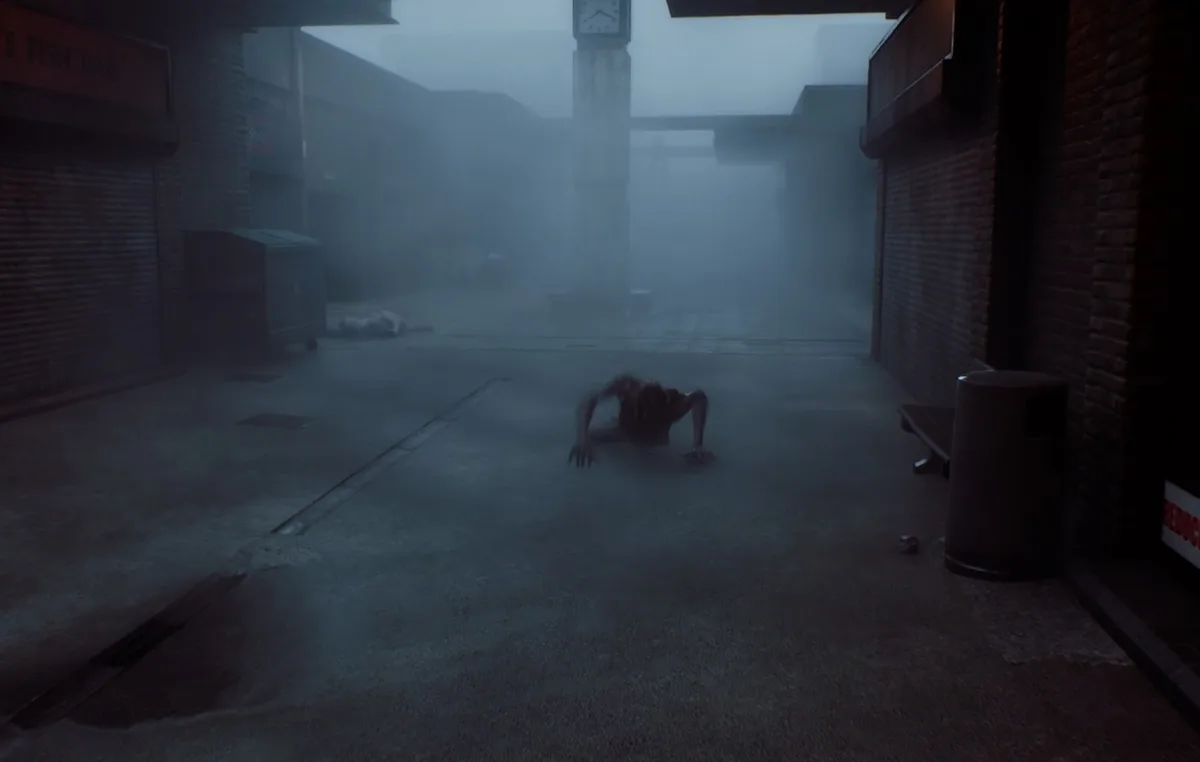
The winding backstreets and quaint local shops – stunningly rendered in the soggy matt textures of classic folk horror ; this is among the most believable and immersive landscapes in the series so far – are soon overrun with chest-rending monsters, hyperactive axe-heads and a towering creature lost in the fog overhead.
To make Simon’s predicament worse, as he attempts to track down a missing nurse and the unknown man who has summoned him here, the place has a tendency, at unexpected moments, to go a bit Hades-y. ‘Silent Hill: Townfall’.
CREDIT: Konami You know the eerie-industrial-horror drill, but haven’t played it like this before.
In the closest experience yet to Hideo Kojima’s Playable Teaser demo for the much-desired (but ultimately cancelled) Silent Hills project of 2014, Townfall is the first major instalment played entirely in the first person – and in the hands of developer Screen Burn Interactive , it works wonderfully.
Besides our inability to hop over low walls to cut out whole areas of enemies, our willingness to inject ourselves with stuff we’ve found on the floor of a grotty toilet and the bits with the time-travelling tape recorder, realism is paramount.
We’re cast back into the clunky technological explosion of 1996, dealing at life-risking lengths with its dial-up internet, unreliable printers and the particular terror of the corrupted floppy disk.
Simon carries around a hand-held portable TV device that acts as warning and tracker for enemies – a smart, radio-tech get-around for the whole ‘seeing through walls’ conundrum – and a hub for fine-tuning mini-games that unlock clues to objectives and bizarre postcard collectibles.
Saving progress involves literally dialling a number on push-button keypads, lock dials are pleasingly 3D, bullets realistically scarce.
Some formerly-human monsters even have pictures of their families clipped to their waists.
5News aggregated this summary from the outlet’s public feed. The full article, with all the context, is on www.nme.com — the content belongs to NME.