‘I spent five years with criminals’: dissident Cuban artist embraces new life in US after prison release
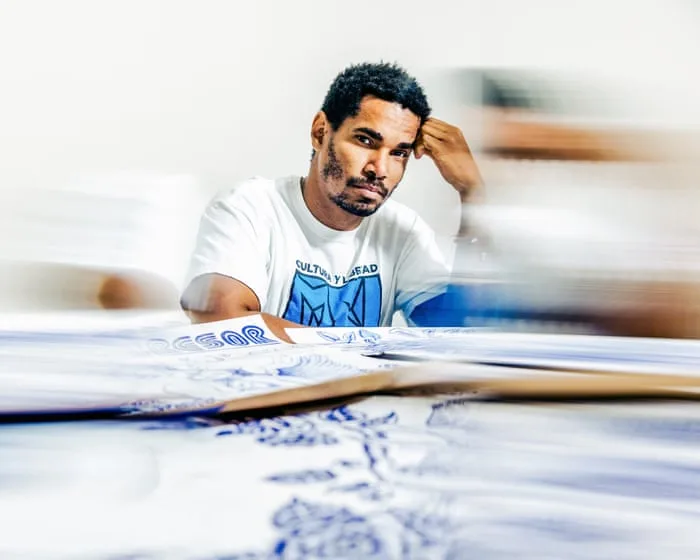
Luis Manuel Otero Alcántara tells of the reality of prison, drinking whisky with his captors, and being painted by George W Bush
W hen Luis Manuel Otero Alcántara was pushed into the back of a police car on 11 July 2021, during the biggest protests Cuba had seen in nearly three decades, he expected to be in custody for “one, maybe two days”. Instead five years would pass before he was free, and only then after he’d agreed to exile.
“I remember that Sunday,” he says as he opens a beer in El Espacio 23, an art gallery in the Allapattah neighbourhood of Miami . “I was at my girlfriend’s. Friends started writing to tell me there were demonstrations in the streets. It felt like the day we all longed for had arrived – the end of the dictatorship – and I went out into the street.”
He walked for an hour to Old Havana, but was suddenly picked up by Cuba’s revolutionary police. First he was taken to a former seminary in Havana’s suburbs, the much-feared state security interrogation centre of Villa Marista; then, after two days, to Cuba’s maximum security prison, in Guanajay.
There he became the best known of the more than 1,000 political prisoners believed to be incarcerated in Cuba.
He also became the most corrosive to the reputation of Cuba’s government. In contrast to José Daniel Ferrer, the 56-year-old hard-fighting and political former prisoner who was released in October 2025, Otero Alcántara is an artist: unruly certainly, but young, mischievous, mixed race, self-taught and from a poor background.
For many Cubans on the island, the treatment he received encapsulated a sense that the state had come down too hard on young people following 11 July. There’s no doubt that in the run-up to the protests, Otero Alcántara had been troublesome to Cuba’s embattled government. In 2018 he had co-founded the San Isidro collective in a poor part of Old Havana, protesting against a new law, decree 349, that required all artistic endeavours to be pre-approved by the state.
His performance pieces were pointed. He mocked a new $500-a-night hotel that none of his neighbours could afford by asking what had happened to the statue of Julio Antonio Mella, student leader and Marxist, which had previously stood outside. Or he hung out under a balcony in a hard hat after one collapsed, killing three young girls.
These pieces cut through. He believes the authorities would have tolerated such work if he’d agreed to show it in galleries. “I refused, because no one who mattered to me would see it,” he says. “Instead, I tried to speak directly to people on the street, and that wasn’t acceptable.”
The San Isidro collective was cut off by police and surveilled, its occupants harassed. Otero Alcántara says those within drew confidence from each other as the pressure, and the public interest, increased.
“There were so many points of view in San Isidro,” he says now. “There was a babalao [a high priest of Santeria, Cuba’s syncretic religion], a Muslim, a gay person – all the layers that make up a society. San Isidro united them, and from there it generated a ripple effect.”
The reality of prison, he says, was horrific.
5News aggregated this summary from the outlet’s public feed. The full article, with all the context, is on www.theguardian.com — the content belongs to The Guardian UK.