Does 'rewilded' land need better wildfire prevention measures?
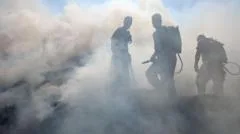
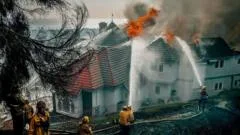
As we're driving in a pickup truck to see the aftermath of a huge fire which burnt for more than a month in the Cairngorms, I spot fresh smoke coming from the ground.
My guide - RSPB Scotland's site manager at the Abernethy nature reserve, Ben Oliver-Jones - puts the vehicle in reverse and we jump out to see what's happening.
It's one of several hot-spots which keeps emerging a full week after firefighters left the scene , which Ben likens to a game of whack-a-mole in an already charred landscape where the smell of burning still hangs heavily in the air.
But while the small pockets of smouldering vegetation are still being dealt with, attention is turning to improving wildfire protection.
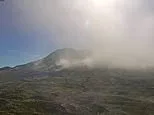
More than 2,500 hectares of moorland and forest - about 10 square miles - was destroyed in the fire, which led to the evacuation of an entire village and where the smoke could be seen and smelt 60 miles (96.5km) away in Aberdeen.
Like a growing number of Scotland's estates, the Loch Garten and Abernethy nature reserve is being managed for ecological restoration - what others might describe as 'rewilding', a now polarising term which the RSPB avoids using.
Opponents have argued that the process leaves areas more vulnerable to uncontrollable fires, which the charity disputes, but it has identified significant land management changes it plans to make.
The changes focus on four key areas: fire breaks, wetlands, heather management and tree planting.
While the estate's network of tracks functioned as a fire break in some locations, in other areas strong winds helped high flames jump the gap.
Experts say fire from burning heather can reach heights of six metres and that fire breaks need to be three times the flame height.
RSPB Scotland says it now acknowledges that fire breaks need to be wider and has already started that process on its long network of forest trails.
Machines have been used to remove vegetation on either side of the track with the hope that what remains would not create such high flames if it were to ignite.
While it might look desolate now, the hope is that some insects and plant species will eventually colonise the ground either sides of the tracks.
It also plans to create more ponds and wet areas around the site which can be used as a source of water to pump onto fires.
5News aggregated this summary from the outlet’s public feed. The full article, with all the context, is on www.bbc.co.uk — the content belongs to BBC News Science and Environment.