The Letby case inquiry will lead to more blame and suspicion in the NHS – and patients will be less safe | Mark McDonald
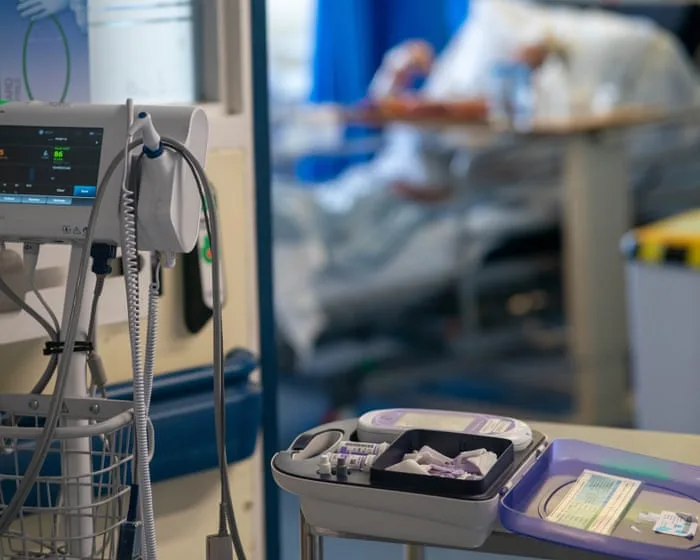
I fear for what comes next because medics must be able to ask questions, raise concerns and admit mistakes. A defensive staff is dangerous for everyone
I have been Lucy Letby’s barrister for the past two years. I have spent thousands of hours going through the evidence, speaking to experts and examining what happened to the babies who died or became seriously unwell on the neonatal unit at the Countess of Chester hospital. I have worked with nearly 30 experts, including internationally recognised specialists in neonatology, pathology, insulin, statistics and other fields. It may be to some an inconvenient truth, but I am convinced that Letby is innocent, and her convictions represent one of the most serious miscarriages of justice in modern British legal history. That means she was failed by the police, the NHS, the criminal justice system and, importantly, a plethora of experts who simply got it wrong.
My work on the case has also raised wider concerns about the evidence and conclusions surrounding the deaths on the neonatal unit, and what the lessons being drawn from this case will mean for doctors and nurses in neonatal medicine.
Neonatal units are among the most demanding environments in the NHS . These are tiny, desperately ill babies. Their condition can change within minutes, and doctors and nurses make difficult decisions under enormous pressure, often with incomplete information.
Sometimes, despite the best care, babies die. That is an uncomfortable truth, but any serious discussion about neonatal safety has to acknowledge it. What worries me is that we risk creating a culture in which clinicians become frightened to work in these environments.
Imagine being a doctor working a night shift in a neonatal unit. A baby’s condition suddenly deteriorates and you have to make decisions quickly, but despite your efforts they die. Then, years later, the circumstances of those decisions are reconstructed with the benefit of hindsight. Every action is examined. Every decision is questioned. And the possibility of a criminal investigation hangs over the process. Who would still want to work in neonatal medicine?
This is not only a theoretical question. The NHS already faces enormous challenges in recruiting and retaining staff. We need people who do take on this challenging work to feel confident enough to make decisions. We need them to be able to say: “I don’t know”. We need them to admit mistakes, report near misses and challenge colleagues and managers. Above all, we need them to tell the truth.
For many years, the NHS has tried to develop what is often described as a learning or “no-blame” culture. The idea behind this was never that there should be no accountability. What it means is that when something goes wrong, the first questions should be: what happened? Why did it happen? And what can we learn?
A public inquiry set up after Letby’s convictions, chaired by Lady Justice Thirlwall, delivered its report in mid-September. The report placed great emphasis on monitoring and surveillance, and specifically stated a need to move away from the no-blame culture .
5News aggregated this summary from the outlet’s public feed. The full article, with all the context, is on www.theguardian.com — the content belongs to The Guardian Society Health.