Final witness in Lindsay Clancy trial says he doesn’t believe she heard a voice during killings
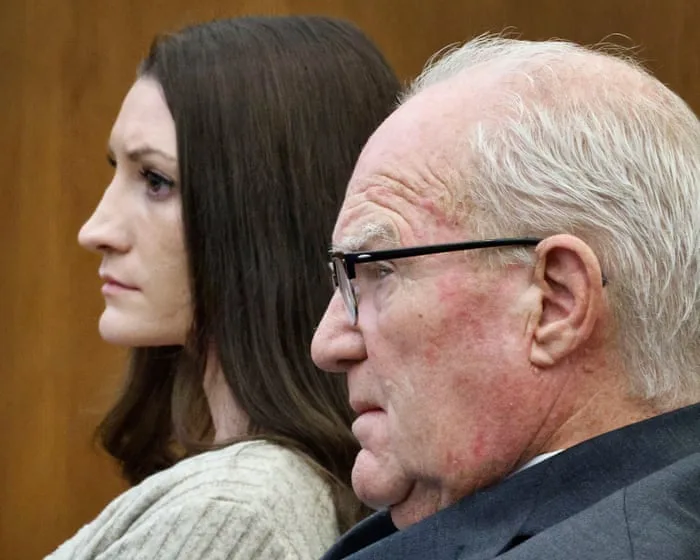
FBI psychiatrist Gregory Saathoff says he’s treated only two women with postpartum psychosis, both decades earlier
The Lindsay Clancy trial was heading for closing arguments on Wednesday, as a final witness for the prosecution laid out that he believed the Massachusetts mother knew right from wrong when she took the lives of her three young children before attempting to commit suicide in 2023.
An FBI psychiatrist, Dr Gregory Saathoff, testified in court in Plymouth that he does not believe Clancy’s account that she heard a voice ordering her to kill the children – five-year-old Cora, three-year-old Dawson and eight-month-old Callan – as her defense team maintains that this occurred while she was suffering from the relatively rare condition of postpartum psychosis.
The issue is the crux of the case: Clancy’s mental health and whether, as prosecutors contend, she knowingly murdered her children or, as the defense argues, she was at that moment outside the realms of reality and, in legal terms, lacks criminal responsibility for her actions. She has admitted to killing the children, but not to murdering them.
Saathoff was asked by prosecutor Jennifer Sprague whether he believed a voice told Clancy where to kill the children, how to kill them, what to use to do it and in what order to kill them.
“Having no instructions as to how to do it, but being able to execute those decisions … that is surprising that she’s able to accomplish all of this without any other kind of direction or plan,” Saathoff testified.
Saathoff testified that Clancy’s ability to accomplish everything she did without direction indicated she “had control, control of the sequence of what she was doing throughout”.
“In the small amount of time that Miss Clancy had in the home without her husband, it was important, in order to carry this out, as well as her suicide [attempt], to do this quickly, methodically and alike,” he added.
Clancy has admitted to strangling her children with exercise bands in the family’s basement while her then husband was out on errands, but pleaded not guilty to a crime, by reason of insanity.
The case has brought national attention to the court as jurors heard dueling explanations for Clancy’s actions over almost five weeks of testimony. Her defense claims that postpartum psychosis , exacerbated by undiagnosed bipolar disorder and a combination of anti-anxiety and sedative medications, led to the killings. Supporters who claim she was failed by the health system last week rallied outside the courthouse.
In recent days, prosecutors have refined their argument that Clancy was a high-functioning mother and a perfectionist who felt she was losing control and planned to take her own and her children’s lives.
Clancy knew right from wrong when she killed her children, Saathoff testified. “The planning involved, prior to the strangling of her children, I thought was significant,” he said.
He pointed to Clancy’s visits to a pediatrician’s office on the day of the killings and later making lunch for her children and building a snowman with them. “The activities of that day were controlled.
5News aggregated this summary from the outlet’s public feed. The full article, with all the context, is on www.theguardian.com — the content belongs to The Guardian Society Health.