Mountain of broken fridges growing across England and Wales
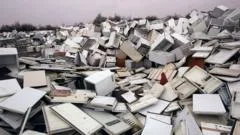
A mountain of broken fridges is building up in waste centres across England and Wales, the Local Government Association (LGA) has warned.
This year's multiple heat waves have increased the numbers of white goods such as fridges and freezers breaking down and needing to be scrapped at specialist sites.
Dozens of councils have been forced to stop collections of white goods due to a major backlog, which has built up due to a national shortage of specialists needed to safely process the appliances.
Earlier this month, Prime Minister Andy Burnham announced the latest crackdown on illegal waste dumps - and the LGA is now calling on the government to take urgent action on dealing with white goods too.
LGA Neighbourhoods committee chair Councillor Arooj Shah called on the government to force white goods companies to pick up the burden, help councils with the cost of extra storage, and prevent the same problems recurring in future.
"The backlog of defunct white goods is getting bigger by the day – they're at risk of becoming a mountain," he said.
"It is not right that residents who are trying to do the right thing can't take old or broken appliances to their local recycling centre due to failures elsewhere in the system."
Councils from Bradford to Gloucestershire , Durham and Nottingham are among 26 to have suspended fridge collections this month.
A Department for Food and Rural Affairs (Defra) spokesman acknowledged the capacity issues and said short-term storage was being set up.
He said: "Our priority is to minimise disruption to household collection or proper disposal of fridges and other cooling equipment, and we are pushing producers of these items to take all necessary steps to achieve this and resolve any collection delays."
Fridges and freezers require specialist dismantling due to the gases they contain, which can be harmful to the environment if not disposed of safely, but three of the UK's 10 full-scale processing plants have closed in the last 12 months.
The three closures - due to a fire, bankruptcy and a change of use - have been compounded by this year's heat waves, as the remaining plants cannot operate above 30 degrees Celsius.
Industry body the Environmental Services Association said this year's closures had ended up "knocking out capacity suddenly" and executive director Jacob Hayler said:
"The result is that capacity is now constrained nationally until facilities can be brought back online or new capacity is permitted and developed."
5News aggregated this summary from the outlet’s public feed. The full article, with all the context, is on www.bbc.co.uk — the content belongs to BBC News Science and Environment.