It took exactly one photo for me to realize the awesome power of the iPhone 18 Pro's variable aperture
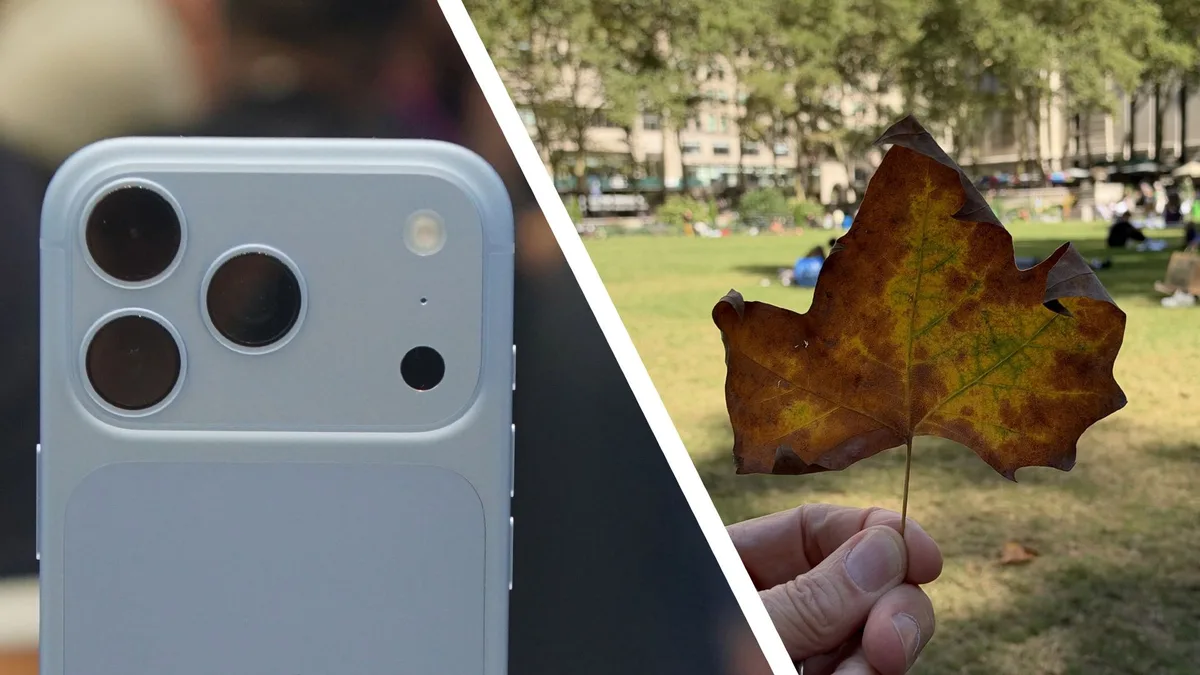
The iPhone 18 Pro Max main camera's new variable aperture is a huge deal and, in my limited experience, I can already see that it could transform iPhone photography.
Still, to know why this matters, you need to understand how it works.
The best analogy is your eyes.
If you've ever squinted to read something, you understand how an aperture works.
The more open your pupil, the more light that comes in, but it's widely scattered, making objects in the distance out of focus.
If you squint, that cuts the amount of light coming into your eye, but it also removes more of the scattered light, leaving only the sharper light and imagery.
On a camera, the open aperture (represented by lower f-stop numbers) has the same effect as your wide-open pupils.
Lots more light, but only stuff nearest you is in focus.
A smaller aperture, represented by higher f-stop numbers, is the eye-squint: less light but more focus throughout the frame.
Ever since Apple announced the iPhone 18 Pro (and Pro Max's) big camera update, which also includes voluminous Pro-level controls, I've been itching to try them.
As soon as I got my iPhone 18 Pro Max in black, I ran outside to see if the update makes an appreciable difference in photography quality and possibilities.
The short answer is yes.
Understanding this new variable aperture A few things you should know about this new hardware feature.
First, it's only on the 48MP main lens, so the 48MP, 4x telephoto, and 48MP ultrawide cameras only have fixed apertures: ƒ/2.8 and ƒ/2.2, respectively.
5News aggregated this summary from the outlet’s public feed. The full article, with all the context, is on www.techradar.com — the content belongs to TechRadar.