Tupac Shakur’s 1996 killing was an ‘act of revenge,’ prosecutor tells jury
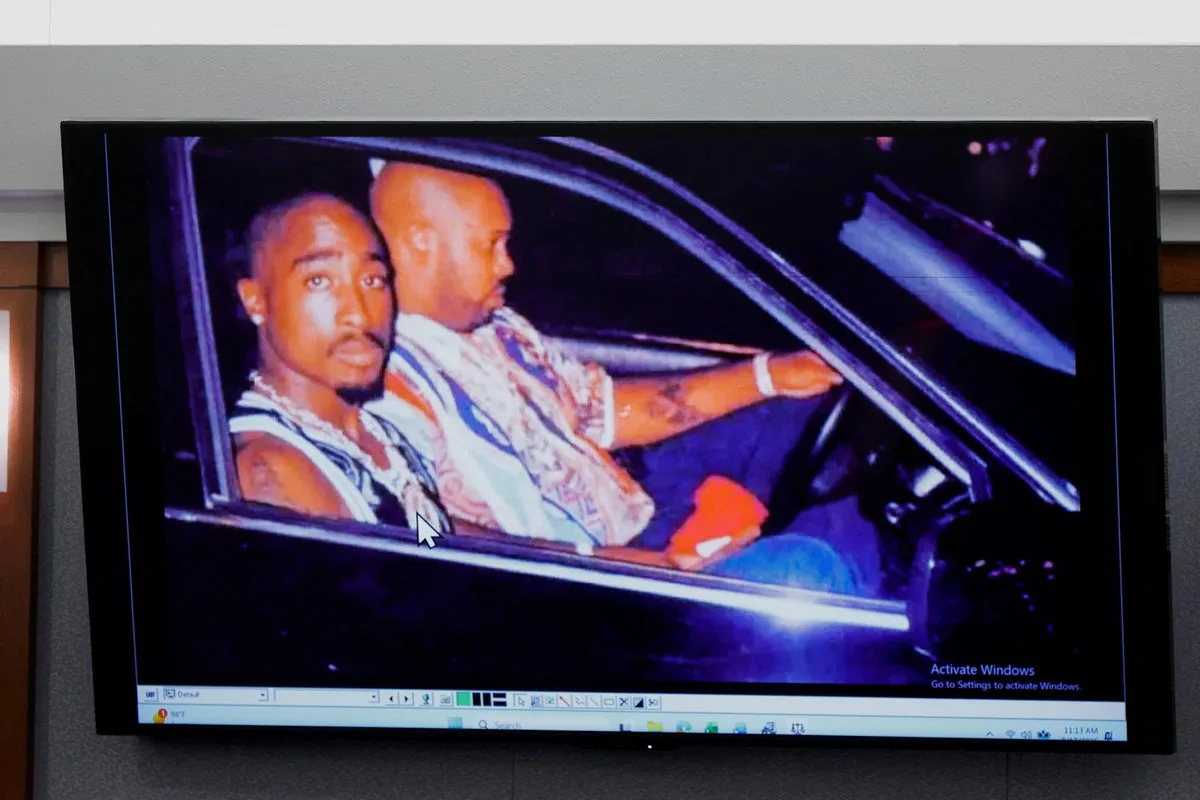
A prosecutor said Monday that while few people have been willing to discuss the 1996 killing of Tupac Shakur , Duane “Keffe D” Davis has been the “one person who has a hard time being silent.”
“Let’s be clear, Duane Davis did not pull the trigger. But he did plan the shooting in retaliation of the beating of his nephew,” Chief Deputy District Attorney Binu Palal told jurors during opening statements in Davis’ Las Vegas trial. “Remarkably, you will learn that from Duane Davis himself.”
Davis, 63, is charged with murder with a deadly weapon and with intending to promote, further or assist a criminal gang in Shakur’s death. He has pleaded not guilty. In his opening statement, Davis’ attorney dismissed the prosecution’s account as “fiction.” If convicted, Davis could face life in prison.
Palal showed jurors video of Shakur’s entourage attacking Davis’ nephew Orlando “Baby Lane” Anderson outside the boxing match at the MGM Grand hours before the shooting on Sept. 7, 1996.
Davis spent the next two hours planning how to get even, said Palal, and Shakur was gunned down “in an act of revenge.”
In a 2008 interview with a federal task force investigating the killing of Shakur's rival, the Notorious B.I.G., Davis instead talked about the Shakur shooting. He described handing a gun to the men in the back seat of a white Cadillac that fired on a black BMW with Shakur and Marion “Suge” Knight inside.
As prosecutors played audio of Davis explaining the moment Shakur was shot, members of Shakur’s family, including his stepbrother Maurice “Mopreme” Shakur, stared ahead and listened intently from the audience.
Palal told jurors Davis held onto a visceral hatred for Shakur for decades that drove him to speak.
He said as early as 1998, the defendant talked to the FBI and admitted he had been in Las Vegas the night of the shooting. He spoke again in 1999 to the FBI and said again he was in Las Vegas then but denied responsibility.
In 2009, he admitted to his role in the killing in an interview with Las Vegas police, Palal said.
“And now 30 years later, we’re going to ask you to finally hold Duane Davis accountable,” Palal said.
He also showed jurors the 2019 memoir that Davis co-authored, “Compton Street Legend,” that the prosecution will use and that the defense fought to keep out of the trial, along with several of the defendant's interviews.
Davis, wearing a blue suit and tie, watched the presentation while sitting next to his attorney. He sat quietly with his hands folded on the table in front of him, occasionally nodding along as his attorney spoke.
“The state has just told you what they believe is the evidence in this case,” attorney Michael Sanft said to jurors in his opening. “What they are telling you, they are representing as fact, when it's really fiction.”
5News aggregated this summary from the outlet’s public feed. The full article, with all the context, is on www.independent.co.uk — the content belongs to The Independent World.