Battle to save the tiny, gooey snail only found in one lake in the UK
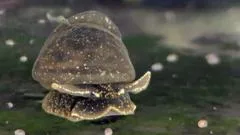
A tiny snail found in only one lake in the UK has been dubbed as precious as an Egyptian artefact as conservationists bid to save it.
Several British zoos are setting up so-called ark populations of the glutinous snail, one of Europe's rarest species, using creatures bred in a back garden in Ceredigion.
"Beguiled by their cuteness," conservationist Ian Hughes has made it his "life-defining" mission to protect the threatened mollusc, which was once widespread in UK waters.
"There was a point where we'd got more snails in our garden than have ever been seen in the wild," he said.
Myxas glutinosa gets its name from the gooey mantle that covers its extremely delicate, gold-flecked brown shell.
It is no bigger than a fingertip, but has comically large antennae - which Hughes likens to "big floppy ears".
The snails, which feed on algae and are considered an indicator of healthy lakes and rivers, have been driven to extinction across England.
Polluted water and habitat loss are largely blamed for their disappearance.
Hughes said the snails were "something to preserve and cherish like Egyptian artefacts".
In the UK, their last known refuge is Wales' largest natural lake - Llyn Tegid - in Eryri National Park, also known as Snowdonia.
Since 2014, under licence from Natural Resources Wales, Hughes has been wading into the lake to collect and study the snails.
He has designed and installed small concrete shelters for them in the lake itself, and set up his own captive population in a greenhouse at his home in Llanarth.
Hughes was left wondering "will they survive an hour, will they survive a day"?
"Nobody had knowingly seen their eggs before we made that breakthrough," he said.
5News aggregated this summary from the outlet’s public feed. The full article, with all the context, is on www.bbc.co.uk — the content belongs to BBC News Science and Environment.