Drivers rethink spending as fuel prices climb
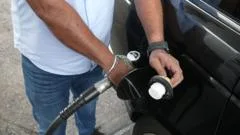
Soaring fuel prices are forcing motorists to cut back on everyday spending and adding tens of thousands of pounds a week to business costs, with petrol at its highest level since November 2022.
Drivers say they are changing their spending habits to cope with rising costs at the pump, while businesses warn higher fuel bills are placing increasing pressure on their finances.
Petrol prices rose to an average of 161.3p per litre between July and August, according to the Office for National Statistics (ONS), the highest level recorded since November 2022, when Russia's invasion of Ukraine pushed up global energy costs.
Among those feeling the impact is Arvander Pabla in Willenhall, in the West Midlands, who drives a lot every day and says rising fuel costs have forced him to make cutbacks elsewhere.
"I do nearly 70, 75 miles per day, and it has really affected me price wise, because it has nearly gone double," he said.
To create more room in his budget for fuel, he said he had reduced spending on takeaways and eating out, and was considering replacing his car with a more fuel-efficient vehicle.
Motorist Sue Willis said the rising cost of filling up was becoming increasingly difficult for households to absorb.
"It's absolutely ridiculous, how we are expected to keep paying for it, I don't know," she said.
"How people are coping as families I don't know, I really don't know."
At a petrol station in Willenhall, fuel retailer Shailesh Parekh said rising wholesale costs were affecting both businesses and customers.
Parekh, director of Midland Motor Fuels Ltd, which operates seven petrol stations across the region, said: "We certainly don't have any control over it, we just have to try and mitigate as much as we can the price increases.
"We do so by filling our tanks up when the prices are going up or delaying the purchase of fuel when prices are going down.
"Most people have a budget for how much fuel they have per week so as prices go up, the number of litres that are sold, drops."
The increase comes as conflict in the Middle East continues to disrupt global oil supplies.
5News aggregated this summary from the outlet’s public feed. The full article, with all the context, is on www.bbc.co.uk — the content belongs to BBC News Business.