How does the new Tesla Roadster 'fly', and is it dangerous to be around its thrusters?
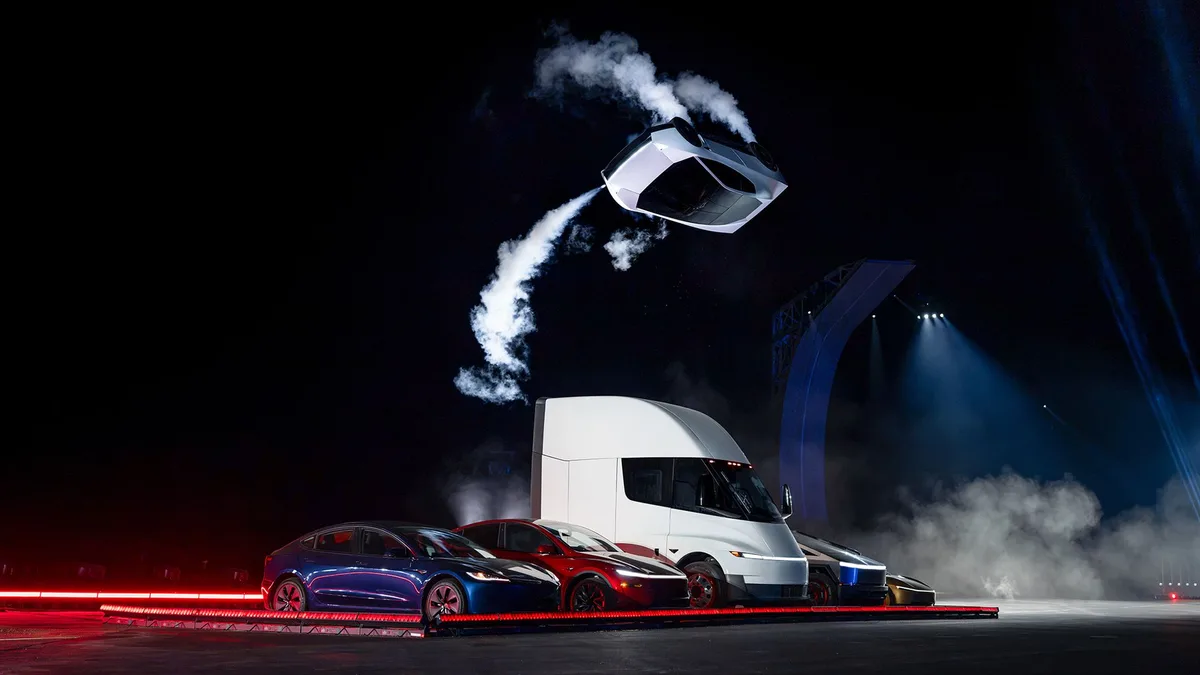
We had to wait a long time for the unveiling of the new Tesla Roadster , but for those who wanted to see something absolutely bonkers, it was worth the wait.
A top speed of more than 230mph, 0-60mph in under 0.59 seconds, and a suction system that lets the car hang upside down, if you're driving along the ceiling for some reason.
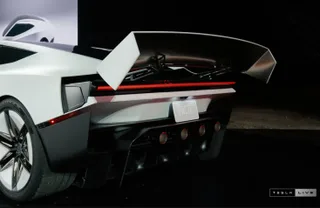
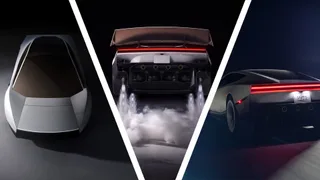
Then there are the rocket thrusters, borrowed from SpaceX, with up to 10 fitted on the top-end Rocket version of the car, which will be available buy by invite only.
These compressed air boosters gave us the most dramatic moments of the unveiling, as the Roadster went upside down and then flipped back over, before later jumping over a procession of parked vehicles. @techradar ♬ original sound - TechRadar How exactly then has Tesla managed to get a car to fly? Is it going to cut down your commute time? And surely this technology can't be safe enough to ever be allowed on the roads? Here's the breakdown of the Roadster's rocket thrusters and how worried you need to be about getting close to them.
How does the Tesla Roadster fly? The Tesla Roadster Rocket landing after riding up the big ramp behind it (Image credit: Tesla) The rocket thrusters on the Roadster are powered by tanks called carbon fiber overwrapped pressure vessels (COPVs).
These tanks hold highly compressed air, and when that air gets released, through the thrusters, whatever they're attached to — in this case, a Tesla Roadster — travels very quickly in the other direction.
These COPVs are attached to cold-gas thrusters, but the air isn't chilled; it's just tightly compressed.
The 'cold' terminology is used to distinguish them from 'hot' rockets that burn fuel, and there's no fuel burning here.
SpaceX has been using similar thrusters for years, to help Falcon 9 boosters land safely back on Earth.
As per Tesla, "every usable void" in the Roadster is packed with COPVs to give the thrusters enough air to work with — a maximum of 600 liters, Tesla says, on the Rocket variant.
That's divided into a 200-liter tank at the back for the rear thrusters (which is also there on the Thrust variant), and a 400-liter tank that replaces the passenger seat on the Rocket model.
We don't know how much flight time that will provide, but it seems unlikely to last much longer than the 'jump', adjustments and landing that we saw in Musk's demo.
So it's unlikely you'll be soaring over city traffic (even if it were road legal).
But if you should find yourself facing a missing section of an unfinished freeway, a la Speed , it should be ideal.
5News aggregated this summary from the outlet’s public feed. The full article, with all the context, is on www.techradar.com — the content belongs to TechRadar.