Big tech says AI can find a cure for cancer. So where is it?
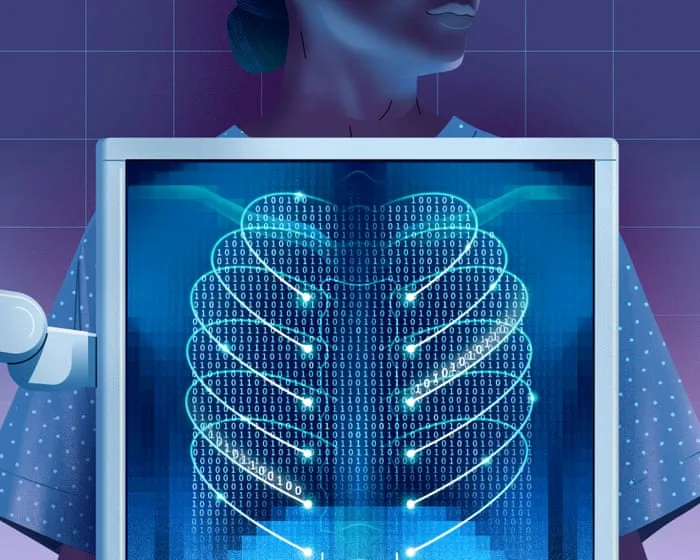
Alongside warnings about its ability to destroy humanity, artificial intelligence is also hailed for its potential to revolutionise health treatment. Just how far can it take us?
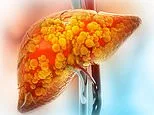
I remember the way her bed made her so small, swallowed her up in the middle of the room, turned as it was to face the window. With her liver failing, her skin was a ghostly apricot. June – I called her Nan – had been stalked by the king of terrors, the emperor of all maladies: cancer. That son of a bitch .
The cancer was in her pancreas. Odds of survival? “Not good” – putting it lightly. The maths, putting it darkly: it’s the 12th most common cancer worldwide, the sixth most common cause of cancer death. The World Health Organization says it is “one of the cancer types with the least favourable prognosis”. It was not favourable for my grandmother.
June died nine years ago. Lately I’ve been thinking about alternate futures – the ones in which my grandmother, and the many millions diagnosed with cancer each year, are still here. The thoughts creep in as we are bombarded by artificial intelligence chief executives making bold proclamations such as “AI will cure cancer in five to 10 years” or “AI will cure cancer in our lifetimes” . Those claims stand in contrast to apocalyptic scenarios, including AI being responsible for human extinction before 2030. AI, we hear, is both saviour and annihilator.
Park the world-ending scenarios and you’ll find there has been significant progress in using AI as a tool in the detection, prevention and treatment of cancer. If there is a future where a supposed AI apocalypse is averted, then it may be one in which cancer therapy has been completely redefined. But just how far can AI take us towards a cure?
Today AI is being turned toward drug development, treatment plans and, in some places, it’s being used clinically, studying imagery of lungs for early signs of malignancy and helping to remove brain tumours . Words like “efficiency” and “personalised care” are everywhere; the notion AI can free up time for doctors and medical professionals to get away from the busywork abound.
Even with such positive advances, speak to clinicians, oncologists and researchers working at the coalface and you quickly find there is tension between the more grandiose claims of big tech and its race to “solve” disease, and the deliberate, considered progress of science.
“Until AI can actually think and do experiments itself at scale, I’m not sure that we’re going to find a cure for all cancer or medical illness in the next 10 years,” says Sherene Loi, a medical oncologist who specialises in breast cancer treatment at the Peter MacCallum Cancer Centre in Melbourne.
But Loi and other cancer experts the Guardian has spoken to believe there will be efficiencies for treatment, diagnostics and pathology services that will bear fruit, heralding more personalised and more equitable cancer care.
Cancer is not a single disease. It’s a catch-all term that describes the uncontrollable growth of abnormal cells. Typically, we describe cancers based on the location within the body that they are found: breast, prostate, lung, brain, blood, pancreas.
5News aggregated this summary from the outlet’s public feed. The full article, with all the context, is on www.theguardian.com — the content belongs to The Guardian Society Health.