Largest review of its kind confirms benefits of tai chi and other Chinese exercises
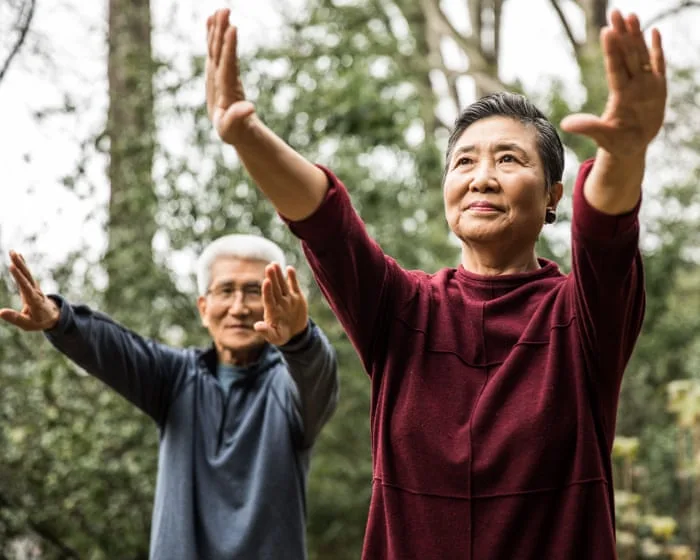
Analysis finds ‘high certainty evidence’ of their effectiveness for the 1.7bn people worldwide with musculoskeletal conditions
Traditional Chinese exercises such as tai chi can offer wide-ranging benefits for people with musculoskeletal disorders, improving physical function, pain, mental health, sleep quality and bone mineral density, according to the largest review of its kind.
More than 1.7bn people have musculoskeletal conditions worldwide. While prevalence varies by age and diagnosis, people of all ages in every country and every continent are affected.
Musculoskeletal conditions significantly limit mobility and dexterity, leading to early retirement from work, lower levels of wellbeing and reduced ability to participate in society. They are also the leading contributor to disability worldwide, with low back pain being the single leading cause of disability in 160 countries .
There was already evidence indicating traditional Chinese exercises were associated with beneficial health outcomes in people with musculoskeletal disorders, but much of it was fragmented and contained inconsistencies.
The overarching review of pooled data analyses of systematic reviews by researchers at hospitals and universities in China, published in the British Journal of Sports Medicine , drew on 92 data syntheses from 1,744 randomised controlled clinical trials.
It found “high certainty evidence” for the effectiveness of traditional Chinese exercise – such as tai chi, qigong, baduanjin, wuqinxi and yijinjing – for a range of health outcomes for people with musculoskeletal disorders.
These included improving movement in knee osteoarthritis, mental health associated with neck pain and knee osteoarthritis, and sleep quality associated with fibromyalgia.
Tai chi, in particular, significantly eased chronic musculoskeletal pain and stiffness in several conditions while increasing bone mineral density in participants with osteopenia or osteoporosis, the research found .
Maximum benefits were achieved when people did these exercises for longer than six months, at least three times a week, clocking up a total of at least 150 minutes a week.
“This comprehensive [umbrella review] provides a definitive, high-level evidence synthesis supporting [traditional Chinese exercises] as effective interventions for a range of musculoskeletal conditions],” the researchers concluded.
“The evidence, particularly for tai chi, reaches high certainty for improving key outcomes such as physical function in knee osteoarthritis, mental health in neck pain, sleep in fibromyalgia and bone density in osteoporosis.”
The findings suggested traditional Chinese exercises should be included in clinical guidelines and rehabilitation programmes worldwide, the researchers added.
“[These] exercises represent a safe, accessible, and cost-effective strategy that can complement conventional therapies, reduce pharmacological reliance, and empower patients in self-management.”
5News aggregated this summary from the outlet’s public feed. The full article, with all the context, is on www.theguardian.com — the content belongs to The Guardian Society Health.