‘Is this too little, too late?’: Cornell students on school’s response to gang-rape allegations
Students say the school is more interested in scapegoating fraternities than in committing to institutional change
I n the wake of a lawsuit over an alleged gang-rape that took place at Cornell University in 2024, the school announced this week that it would be suspending parties and social gatherings at fraternity houses for the remainder of the academic year.
Last month, a former student, referred to in court documents by the pseudonym “Jane Doe”, filed a civil lawsuit against multiple parties, including the university, accusing seven members of the Chi Phi fraternity of sexually assaulting her at a party at their fraternity house on campus in October 2024. All of the men named in the lawsuit have denied wrongdoing, and none have been criminally charged.
In a letter to the Cornell community, the school’s president, Michael Kotlikoff, said that the ban on frat parties will be “provide time for a thorough review of fraternity life at Cornell to determine whether and how it can safely continue”.
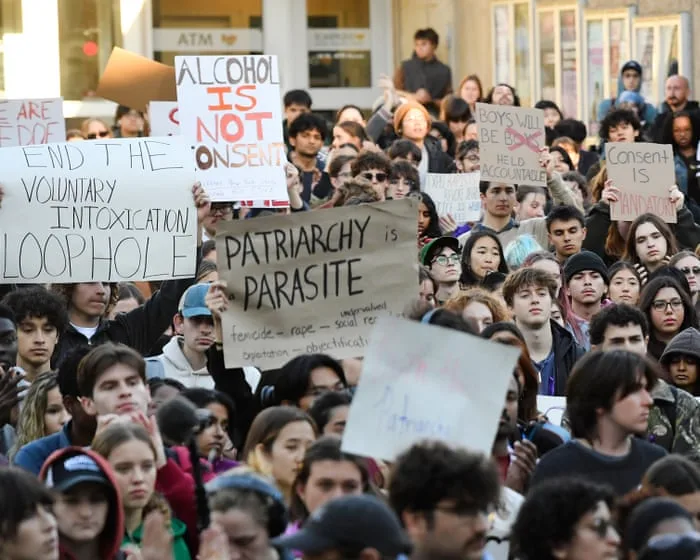
The Guardian spoke with several undergraduate students at Cornell about the university’s decision, as well as their handling of the alleged assault and its aftermath. The measure, which Kotlikoff referred to as an effort to “strengthen campus safety”, was announced on 13 October in a letter to the Cornell community. While some students welcome the ban on frat parties, others argue that the move is an attempt by the administration to avoid a perception of culpability in the case.
When asked for comment, Cornell referred the Guardian to Kotlikoff’s letter to the community from 13 October, in which he said : “I have spent the past weeks listening to students, faculty, staff, parents, alumni, and trustees, who have shared their feelings of deep connection and sympathy with Jane Doe, anger and frustration that this could happen at Cornell, and outrage at the broader prevalence of sexual violence against women in our society. These conversations, and campus protests, have underscored my deep conviction that we must do better: that the time for meaningful and lasting change at Cornell, and at campuses across the country, is now.”
A sophomore at Cornell’s school of industrial and labor relations, who asked to remain anonymous, supports the school’s latest decision. She acknowledged that Greek life “wasn’t something that really added to my experience at Cornell” and that the ban was “so necessary in light of Jane Doe’s experience”.
The student added that while she is not in Greek life herself, many of her friends are. “I think it’s been upsetting for people that are super involved in Greek life,” she said, noting that some members of Greek life feel that they’re being penalized for the actions of others. They “think that [the ban is] somewhat unnecessary because this happened two years ago, and it’s a completely different group of people”.
Some students argued that the opposition is the point, and believe that the administration’s decision was intended to further a divide between the student body.
“The fact that [the administration] thinks a one-year moratorium will solve this is, I wouldn’t say it’s misguided.
5News aggregated this summary from the outlet’s public feed. The full article, with all the context, is on www.theguardian.com — the content belongs to The Guardian UK.