Digital sovereignty has become Europe’s top priority — here's how open source is helping pave the way
Digital sovereignty in Europe has grown from a simple talking point into a strategic priority, and open source software (OSS) is perceived as the continent's way of achieving that goal.
However, there is no sovereignty without security.
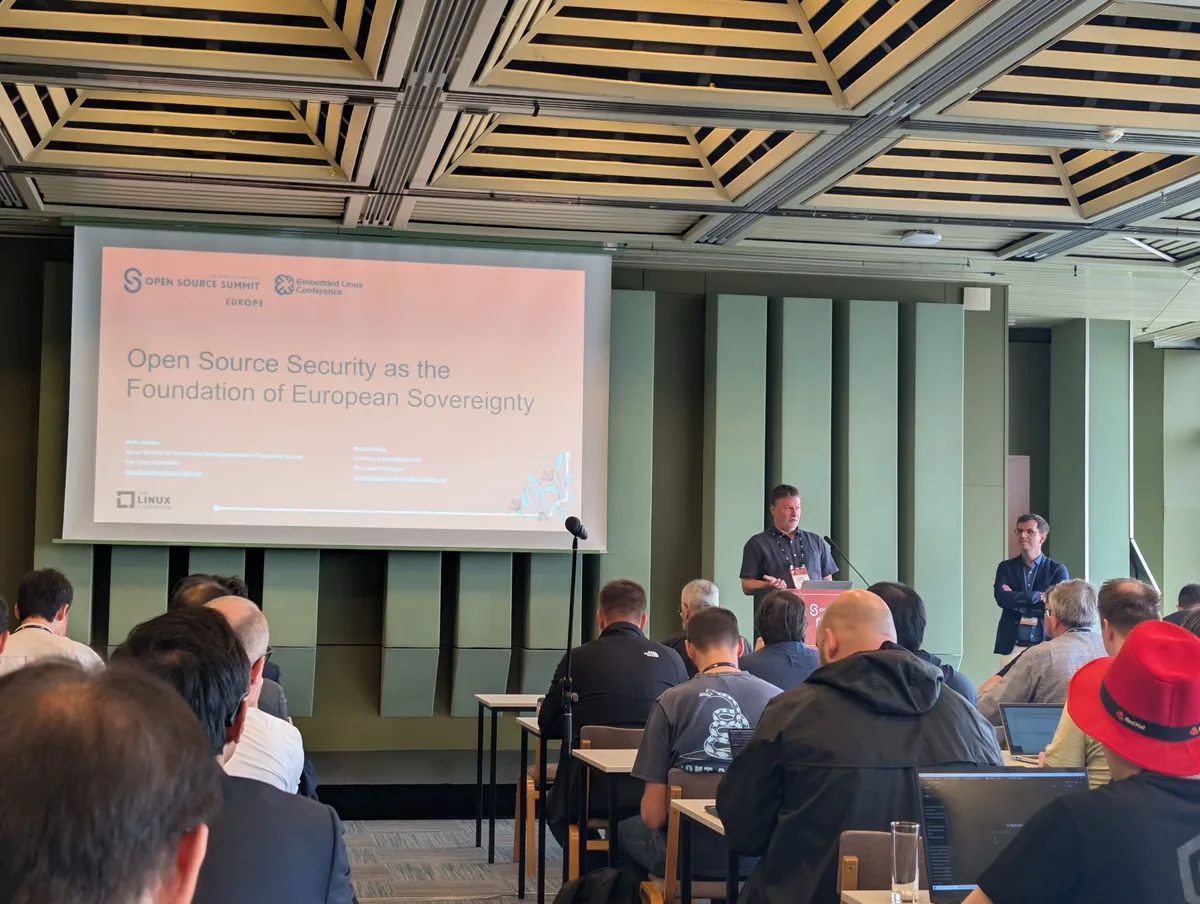
At the recent Linux Foundation Open Source Summit Europe, the Foundation’s Madalin Neag and Mirko Boehm argued that many of Europe's seemingly separate technology initiatives - from NIS2 and DORA to the Cyber Resilience Act (CRA) and its broader Tech Sovereignty agenda, all ultimately converge on solving one problem: securing the software supply chains underpinning Europe's economy.
The global technology race is currently being led by two superpowers - the United States, and China.
The US has the hyperscalers, Nvidia, OpenAI, Google, Microsoft and mind-numbing amounts of capital flowing into AI infrastructure.
China, on the other hand, has its own sprawling Artificial Intelligence ecosystem, domestic chip ambitions, and companies such as Alibaba, Tencent, and DeepSeek.
Both are in a race for chips, electrical energy, and data center capacity, while Europe seems to be sidelined, without a horse in the race.
The European Commission itself acknowledges the position it is in.
After years of regulatory leadership and investments, non-EU providers still account for more that 80% of the bloc’s digital products, services, infrastructure, and even intellectual property.
Europe’s open source bet The European Commission launched its new technological sovereignty package in June 2026, containing things like the Chips Act 2.0, Cloud and AI Development Act (CADA), a roadmap for digitalization and AI in energy, and a new EU Open Source Strategy .
The latter is particularly significant because open source already powers most of the tech Europe relies on, from cloud infrastructure to financial services, from government systems, to AI.
The Commission estimates that around €2 billion ($2.23bn) in public and private investment will be needed for the open-source strategy over the next seven years.
That includes expanding the Open Internet Stack as a one-stop shop for open-source building blocks, supporting open-source business accelerators, encouraging its use in public procurement and R&D programs (such as, for example, Horizon Europe), and working with member states through initiatives including the Digital Commons EDIC .
While the word “sovereignty” might suggest technological isolation, what the EU is trying to do here seems to be exactly opposite.
5News aggregated this summary from the outlet’s public feed. The full article, with all the context, is on www.techradar.com — the content belongs to TechRadar.