US interest rates raised for first time in three years
US interest rates have been raised for the first time in more than three years and could be increased further in a bid to slow rising prices.
Rates were hiked to 3.75%-4% from 3.5%-3.75% by the Federal Reserve in a unanimous decision, despite fierce opposition from President Donald Trump, who had called for rates to be cut.
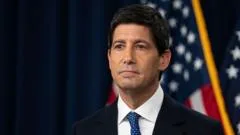
Fed Chair Kevin Warsh said the move was because "inflation is too high and has been for too long", adding that it was a "sober" and "responsible decision".
However, Trump said rates "should be 1%, or less, because we are the Best Credit in the World - BY FAR".
Higher interest rates make borrowing more expensive for people wanting to secure loans, mortgages, and credit cards, but can lead to better returns on savings.
Warsh said during a press conference on Wednesday following the decision that, while there was "an attitude of optimism" within the Fed leadership, inflation remained a problem.
Like many central banks, the Fed has a target of keeping inflation at 2% or below. Warsh noted that US inflation has been above the target "for more than five years".
That has helped make affordability one of the top concerns of American voters, who have seen diesel prices hit an all-time high and petrol rise above $4 (£3) a gallon on average as global oil prices have surged. The higher energy costs have driven up the cost of many goods and services, as well.
While the Fed "cannot affect any individual price - whether it be oil prices, whether it be food stuffs at the grocery store", Warsh said, the central bank can work to keep price rises from broadening across the economy.
He added that strength in the jobs market and wider economy meant the Fed was staying focused on stabilising prices, and that those least well off had the most to gain from lower inflation.
Central banks tend to increase rates when inflation is high to discourage spending and encourage saving, in the hope this will reduce the pace of price rises. But it's a balancing act, as higher rates can also encourage businesses to hold off on investing and hurt economic growth.
When he was confirmed, Democratic lawmakers had said Warsh would be Trump's "sock puppet" and many Fed watchers expected him to carry out Trump's persistent demands to slash rates. Trump had been heavily critical of Warsh's predecessor Jerome Powell for not cutting them.
Asked on Wednesday about the message the rate hike sent to Trump, Warsh chuckled before saying: "I have got nothing for you on a discussion with the president."
Soon after, Trump said on social media: "LOWER THE INTEREST RATES FOR THE UNITED STATES OF AMERICA, AND FAST!"
5News aggregated this summary from the outlet’s public feed. The full article, with all the context, is on www.bbc.co.uk — the content belongs to BBC News Business.