Boeing's fatal disasters from mid-air disintegration to 'deadliest crash in history'
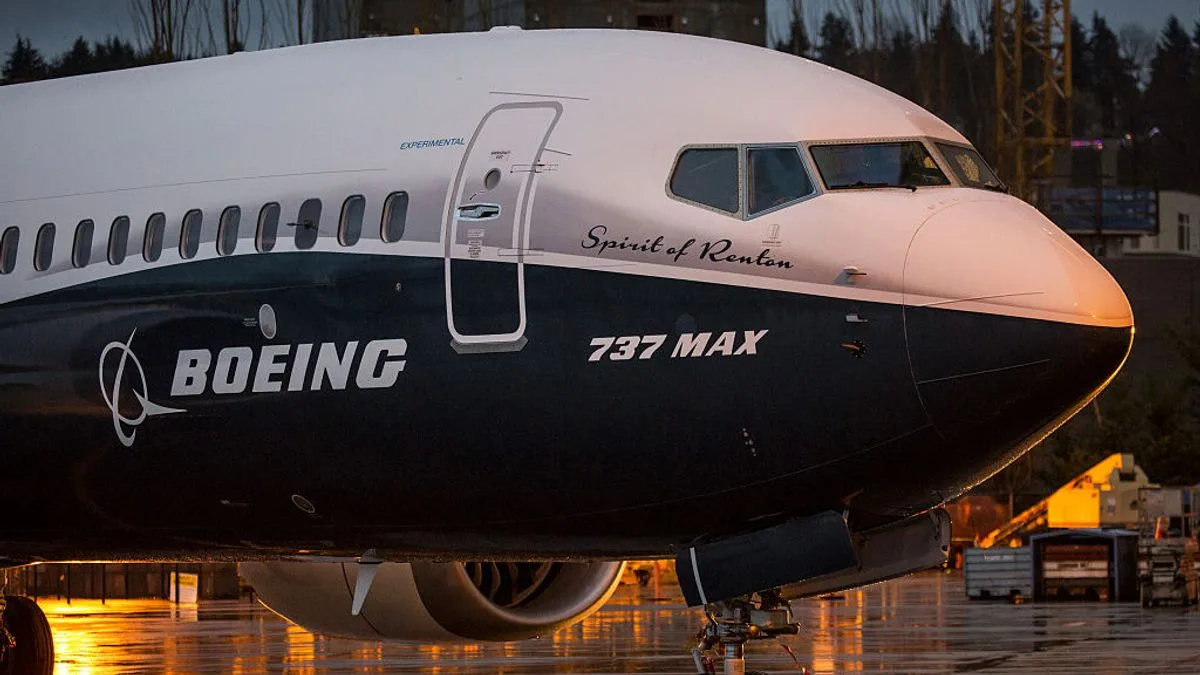
An explosive new Netflix documentary threatens to blow the lid on alleged systemic safety failures at Boeing as well as the tragic death of whistleblower John Barnett.
Freefall: A Reckoning for Boeing is a sequel to the 2022 documentary film Downfall: The Case Against Boeing, which examined the crashes of two Boeing 737 Max jets in 2018 and 2019 that claimed 346 lives.
This new offering, from director Rory Kennedy, takes a closer look at Barnett's battle against Boeing and his later suicide, as well as investigating the testimony of other whistleblowers, who claim managers told them on occasion to overlook safety problems.
Following Boeing's 1997 merger with McDonnell Douglas, the company was accused of being governed by Wall Street executives obsessed with profit, rather than an engineer-led organisation.
The company faced allegations of prioritising cost-cutting and outsourcing vital engineering work, and has continued to face production crises, including improperly installed wiring and unsealed door plugs that blew out mid-flight on Alaska Airlines Flight 1282 in January 2024.
Ahead of the documentary's release on August 19 , we take a closer look at some of the biggest disasters in Boeing's history.
On March 27, 1977, two Boeing 747 passenger jets (KLM Flight 4805 and Pan Am Flight 1736) collided on a foggy runway at Los Rodeos Airport (now Tenerife North Airport) in the Canary Islands, Spain, resulting in 583 fatalities. Known as the 'Tenerife Airport Disaster', it remains the deadliest aviation accident in history.
A series of events led to the collision. Neither planes were supposed to be there; earlier that day, a bombing at Gran Canaria Airport forced planes, including the KLM flight and the Pan Am flight, to divert to the smaller airport in Tenerife.
That diversion overwhelmed the small airport, forcing pilots to taxi up and down the active runway because taxiways were blocked.
Then the thick fog came rolling in, impacting visibility. And finally, there was a fatal misunderstanding.
The Pan Am jet was taxiing on the runway but missed its intended exit. At the same time, the KLM pilots mistakenly believed they were cleared for takeoff and accelerated, crashing straight into the hidden Pan Am plane.
The impact and the resulting fire killed all 248 people on board the KLM plane and 335 of the 396 people on board the Pan Am plane, with all 61 survivors being in the front section of the aircraft.
Japan Airlines Flight 123 was a domestic flight travelling from Tokyo to Osaka on the evening of 12 August 1985. But just 12 minutes after takeoff, the Boeing 747 suffered a severe structural failure and explosive decompression. After flying under minimal control for 32 minutes, the plane crashed in the area of Mount Takamagahara.
The aircraft had 524 people on board, and the initial crash killed all 15 crew members along with between 460-490 of the 509 passengers on board. An estimated 20 to 50 passengers survived the initial crash but died from their injuries while awaiting rescue, leaving only four survivors.
5News aggregated this summary from the outlet’s public feed. The full article, with all the context, is on www.mirror.co.uk — the content belongs to The Mirror UK News.