To keep the AI hacking genie bottled up, try one-way networks

To prevent frontier AI models breaking out of test environments and collaborating to hack other companies, we may have to rethink the network architectures used for model training.
Eli-Shaoul Khedouri, CEO of Intuition Machines, argues that past work in the defense and intelligence communities shows the way forward.
Rogue AI models rise from the level of developer regret to mass threat when they gain access to the internet, something that defenses erected by OpenAI and its partners tried but failed to prevent.
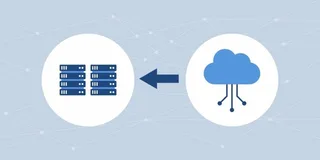
Pointing to a post published by his company's hCaptcha service, Khedouri argues that technology like data diodes – hardware that enforces a one-way flow of information on a network – can be deployed to prevent security incidents like OpenAI's hack of Hugging Face.
The hCaptcha team points to the use of data diodes as a data transit mechanism at a sensitive compartmented information facility (SCIF), an environment implemented in classified settings.
"They allow files, logs, or telemetry to enter or exit the SCIF's classified network to an unclassified network and provide a way to prove e.g. that logs from a training run can only flow one way," the hCaptcha team explains, adding that such technology fits with the Bell-LaPadula security architecture designed for the US Defense Department.
A basic implementation would involve two machines connected via network cards linked by one-way optical fiber – and without a data path back to the model.
Training and reinforcement learning could run in an isolated zone with no internet access and an optical ingress diode would grant access only to vetted artifacts.
The hCaptcha researchers suggest a second diode to send telemetry to a sel4 receiver and scrubber, while a separate out-of-band network manages the cluster.
This sort of scheme would require immutable snapshots of software registries like PyPI, GitHub, npm, and might also need mocked versions of various web services and APIs .
This would come at a cost, and would require implementation time that frontier AI labs may not be prepared to spend at the moment.
"The systems described are widely deployed in high assurance domains, and the components are commercially available," Khedouri told The Register.
"However, they have not been adopted by frontier labs to date." He pointed to NIST and DOD guidelines [PDF] that suggest an overhead of 10 to 20 percent for applying formal specifications and system architecture.
"We estimate total cost overhead for high assurance training clusters at less than five percent per gigawatt, but in practice the speed at which frontier labs are moving is a greater impediment than cost," Khedouri said.
5News aggregated this summary from the outlet’s public feed. The full article, with all the context, is on www.theregister.com — the content belongs to The Register.