Mum wants people to know 'there is hope after pregnancy loss'
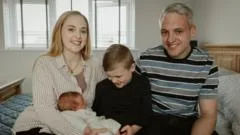
A woman who welcomed a daughter after two pregnancy losses has said she wants others who face similar heartache to know "there is still hope".
Hayley Metcalfe, 37, from Runcorn in Cheshire, said she and her husband Mike were "over the moon" to find out she was pregnant with her second son in 2023.
But what followed was three years of heartbreak when Hayley suffered a placental abruption at 19 weeks pregnant and was told her baby boy, who they had named Oscar, had died.
The following year, the couple lost a second baby, who they had named Leo, at 17 weeks pregnant.
"The road after baby loss is never easy and trusting again can feel impossible," said Hayley.
Hayley said the couple had always wanted to start a family and, in 2019, the pair welcomed their eldest son George.
She recalled how she had a normal pregnancy with George so when she fell pregnant again in 2023, her and husband Mike were excited to grow their family.
But at 19 weeks and four days into her pregnancy, Hayley said she felt as though "something wasn't right".
"It sounds awful, but when you know your baby is no longer alive, you just want it all to be over," she said.
"We told George that his little brother wasn't going to be coming home."
"I was in labour for nine hours and it was incredibly difficult knowing I would never hear my baby cry," she recalled.
"After the funeral, the support from other people gradually faded and life simply carried on, even though I was consumed by grief."
A post-mortem examination later revealed Hayley had suffered a silent, concealed placental abruption, meaning her placenta had separated from the wall of the womb.
In summer 2024, Hayley said she was "terrified" when she became pregnant again.
5News aggregated this summary from the outlet’s public feed. The full article, with all the context, is on www.bbc.co.uk — the content belongs to BBC News Health.