This new solar panel tech could take it past a significant threshold
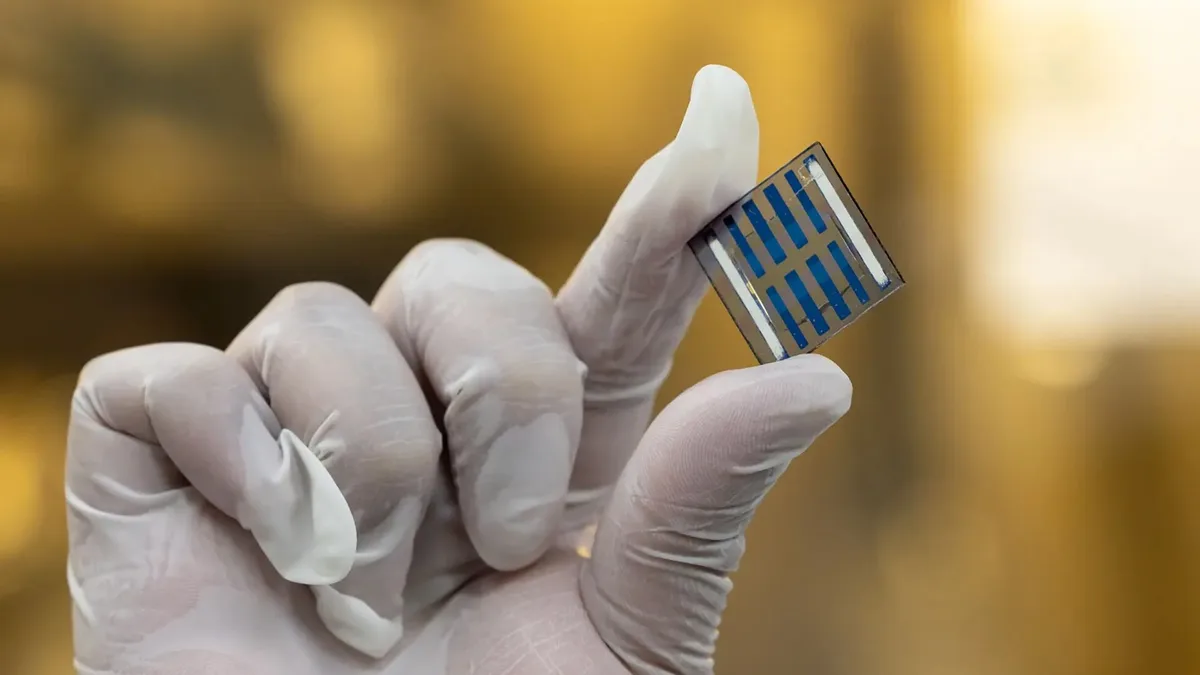
Solar power continues to be used more widely , and the science behind the technology is developing too: researchers from the Institut de Ciencies Fotoniques (ICFO) in Barcelona, Spain have just announced a breakthrough in solar cell engineering that could push efficiency rates beyond the standard 33% ceiling.
When the solar panels of today convert sunlight to electricity, most of the energy is lost along the way, through heat and light — one way to think about it is as the 'cost' of conversion.
A physics theory known as the Shockley-Queisser limit predicts that we'll only ever be able to hit a 33% conversion rate in standard single-layer solar cells.
However, scientists like the team at ICFO are hard at work trying to break the Shockley-Queisser rules.
In this particular study, the focus is on the faint infrared glow that solar cells give off: it's technically called the Boltzmann loss, and it's part of the reason today's solar tech is stuck below that 33% limit.
Beat the glow The ICFO research team (Image credit: ICFO) When sunlight hits a solar panel, the photons in the light knock electrons loose in the panel's semiconductor material.
Those electrons can be pushed out as electricity, but not all of the electrons are collected in time: some escape and are turned back into photons, which creates an infrared glow spilling out in all directions.
To tackle the problem, the ICFO team took a standard solar cell and swapped out the transparent front electrode — that's the bit the sunlight strikes first, and it has to both conduct electricity while also letting as many photons through as possible.
Rather than using the standard indium tin oxide for a front electrode, the scientists used a very thin layer of silver, thin enough to let most of the light through, operate as a conductor, and also behave partly like a mirror.
This restricted the angles through which light could escape, boosting the efficiency rate.
"Our study is a significant step forward in the solar energy conversion field as it opens a completely unexplored route to surpass the Shockley-Queisser limit," says Dr.
Francisco Bernal Texca, the first author of the new study.
By adapting and evolving the approach used here, the scientists say that efficiencies close to 43% could be possible, in theory — though it's important to note that the team only observed small gains in efficiency in their tests.
The 43% claim is a prediction about the potential of this method.
5News aggregated this summary from the outlet’s public feed. The full article, with all the context, is on www.techradar.com — the content belongs to TechRadar.