Could perfume on your neck be harming your health? Experts weigh in
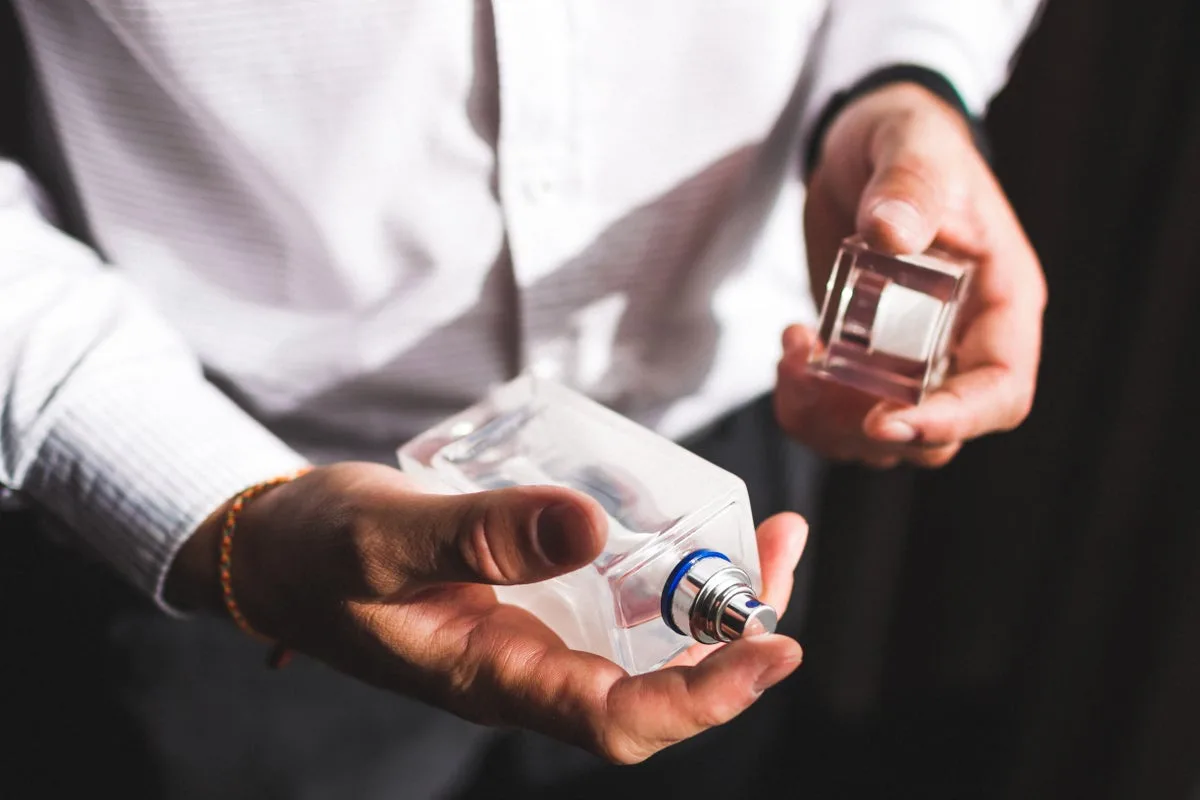
A spray of perfume on the neck is a familiar final step before leaving the house. But a viral Instagram post by a cancer specialist has singled out the neck as an area “worth thinking about” because it lies close to the thyroid gland.
The caption says there is no evidence that spraying perfume on the neck damages the thyroid. Yet its references to hormone disruption and lifelong chemical exposure through thin skin may suggest a possible link with thyroid disease or cancer. Could a quick spritz really pose a special risk?
Current evidence does not show that applying perfume over the thyroid selectively delivers fragrance chemicals to the gland or exposes it to a higher dose than spraying elsewhere. Research on skin absorption and the anatomy of the neck do not support the idea of a direct, selective route to the thyroid.
The thyroid is a butterfly-shaped gland in the lower front of the neck. It releases hormones that help control how the body uses energy and sits beneath the skin and several layers of connective tissue and muscle.
Skin acts as a barrier. An ingredient may evaporate, remain on the surface, enter the skin’s layers or reach the bloodstream. Absorption depends on the chemical, its mixture, skin condition and location, dose and contact time.
Body site can influence absorption. Once a chemical reaches blood vessels in the deeper skin, it can circulate more widely. Applying a substance near an organ does not automatically target that organ.
Safety assessments of sprayable cosmetics also consider inhalation. This route does not give the thyroid special exposure from neck application.
Much of the concern centres on phthalates, a family of chemicals with different uses and health effects. Diethyl phthalate, or DEP, has been used as a solvent and fixative in fragrances. Other phthalates have mainly been used to make plastics flexible. Evidence about one member of the family cannot simply be applied to all the others.
A systematic review published online in 2024 brought together 17 studies involving 5,616 children and adolescents . It reported associations between phthalate exposure and levels of some thyroid hormones, while findings for other hormones were inconsistent. The studies examined exposure from multiple sources. They did not investigate perfume application to the neck or the development of thyroid disease, and cannot establish cause and effect.
Perfume can contribute to DEP exposure. In a study of 337 women , perfume users had higher urinary levels of monoethyl phthalate, a breakdown product of DEP. This supports perfume as a source of DEP exposure. The study did not examine thyroid damage or application site.
An “endocrine disruptor” is an outside substance that changes the hormone system and causes a harmful effect. Risk depends on the chemical, dose, route, timing and duration of exposure. A hormonal effect in a laboratory experiment does not establish the risk from a finished perfume used in everyday conditions.
Repeated use means repeated exposure, although it does not necessarily mean accumulation.
5News aggregated this summary from the outlet’s public feed. The full article, with all the context, is on www.independent.co.uk — the content belongs to The Independent Health.