Dolly Parton built a better world, with rhinestones and songs
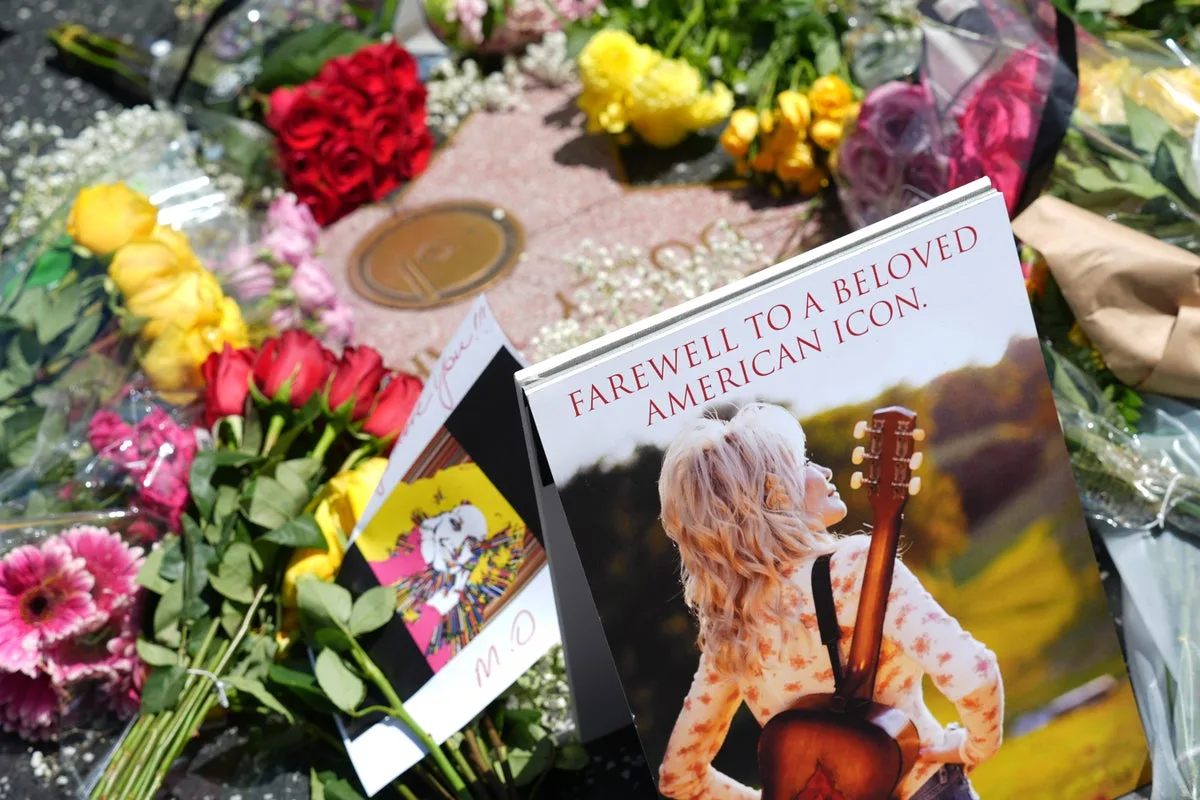
There are few inalienable truths: Everyone was born, everyone will die, and everyone loved Dolly Parton .
Larger-than-life at 5-foot-nothing, the country star, actor, philanthropist, entrepreneur and theme park enthusiast who died Tuesday, transcended celebrity in rhinestones and fringe. She was embraced by fans across gender, race and class, embodying a mythology typically inaccessible to even the most influential historical figures.
It’s hard to name a more adored artist — one who could deliver a perfectly timed dirty joke seconds before a folk classic of her own composition. (This is where, if Parton were reading along, a self-deprecating quip would come in — lest anyone forget she was a whip-smart jokester, too.)
Throughout her endeavors, Parton worked to build a better world, while becoming inextricable from the American imagination. It is one of her greatest legacies: to take what you have and help someone with it.
In 2015, when Parton returned to Nashville’s Ryman Auditorium, Grand Ole Opry announcer Bill Cody introduced her as “the most beloved artist of all time,” quickly amending it to “female artist.” As history has proven, he was correct the first time.
Parton’s legacy starts with the immortality of her music: songwriting as solace, an exercise in creativity and an unwavering ability to write experience into art. Across her career, Parton wrote and performed perennial hits (“Jolene,” “Coat of Many Colors,” “Little Sparrow,” take your pick) and others that took on a life of their own (most famously, “I Will Always Love You,” made immortal by Whitney Houston ).
Parton grew up in poverty, one of 12 kids in East Tennessee’s rural Sevier County, where she started writing songs as a toddler. By 10, she was on the radio and TV in Knoxville, Tennessee. By 13, she had made her debut at the Grand Ole Opry. At 21, she joined “The Porter Wagoner Show,” her star power quickly eclipsing its host.
The accomplishments — and the trials and tribulations that came with them, which she let roll off her shoulders with enviable resiliency — came fast and furious, as they do with once-in-a-lifetime talents. There are the 10 Grammys, the numerous Hall of Fame inductions, and the fact that she revolutionized the world of country music for women alongside Loretta Lynn and Tammy Wynette, creating a path for crossover artistry. But there are also her Hollywood forays. It’s telling that her first feature film, “9 to 5,” celebrated women in the workplace and messed with their devious bosses.
One of her superpowers was rooted in a kind of irony: Everything about Dolly Parton is truly Dolly Parton or else she wouldn’t partake — down to the false eyelashes and big wigs. She built an economic empire with down-home sensibilities. If authenticity is currency in popular culture, Parton showed the world how it was done.
There’s a moment in her 1983 television special, “Dolly in Concert,” where Parton calls herself “the original punk rocker.” It’s a fitting description: Armed in a uniform of high heels, acrylic nails (the better to write songs with), tight clothes and big blond beehive, the image of Parton was enough to scandalize.
5News aggregated this summary from the outlet’s public feed. The full article, with all the context, is on www.independent.co.uk — the content belongs to The Independent World.