I tested a cheap Dolby Atmos 5.1 soundbar system with rear speakers — here’s where it impressed me, and where it fell short of the competition
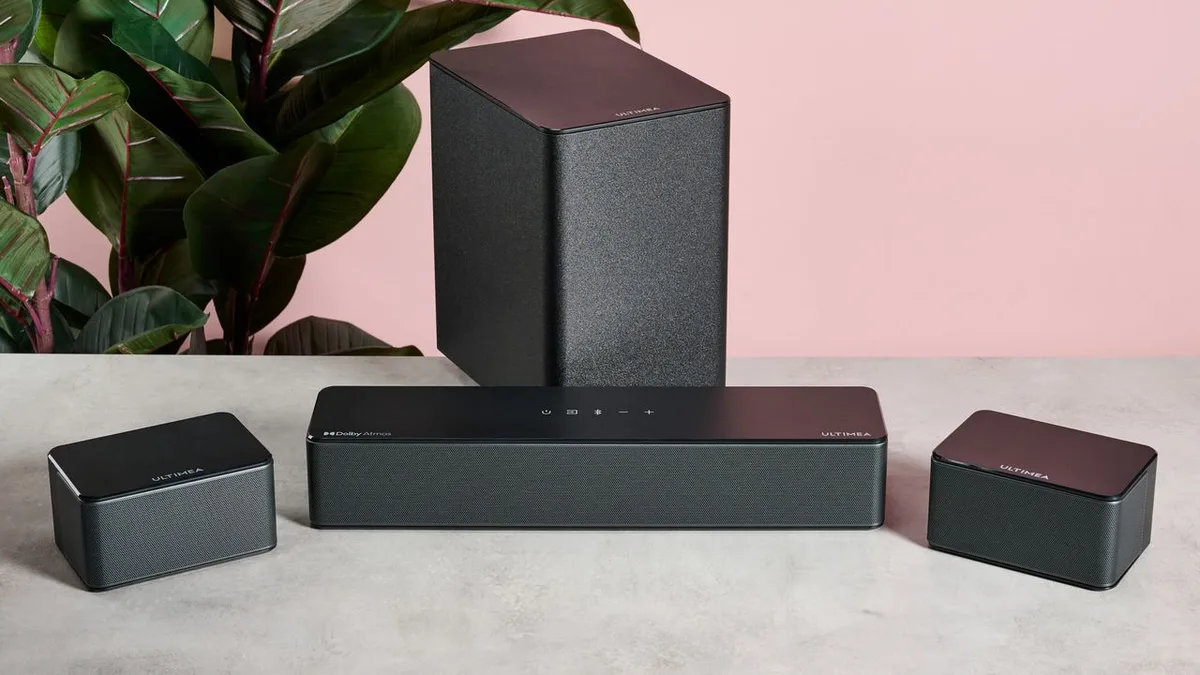
Ultimea Poseidon D60 review Looking to unleash the power of surround sound on your living room without breaking the bank? Then the Ultimea Poseidon D60 surely seems like a tempting proposition.
This 5.1 channel system comes with a compact main bar, a small subwoofer, and a couple of surround speakers, enabling you to experience more expansive audio than your TV can provide alone.
Not only that, but the D60 supports Dolby Atmos, has a wide array of connectivity options, and customizable sound.
All of that for less than $200 / £200? Seems like a sweet deal.
But is the Ultimea Poseidon D60 actually worth considering? Can it compete with some of the best cheap soundbars around? I spent a few days testing it, and this is my verdict.
First things first, let’s talk setting up.
The D60 isn’t especially hard to get up and running.
The sub is wireless, and pre-paired to the main soundbar, and both of those units just need to be hooked up with a power cable, as well as an HDMI or digital optical cord for the bar itself.
However, the rear speakers are not wireless — you have to connect them up to the subwoofer with RCA cables.
Depending on your placement of the sub, this can look pretty messy, and I prefer the solution offered by models like the Majority Bowfell Halo Atmos , where you wire the two surround speakers together with just one linked to a power output.
Otherwise, setup is simple.
You can use either the included remote, or Ultimea’s companion app to adjust aspects such as channel levels, EQ settings, source controls and more.
The included remote looks and feels a bit cheap and I found that it wasn’t always perfectly responsive, but the D60 does have HDMI CEC support, meaning you can simply use your main TV remote to alter the soundbar’s volume.
More generally, I have to say that the Poseidon D60 does look as cheap as its price suggests.
5News aggregated this summary from the outlet’s public feed. The full article, with all the context, is on www.techradar.com — the content belongs to TechRadar.