Ex-FTC boss Khan urges Uncle Sam to break out the handcuffs for AI CEOs, citing 1934 precedent
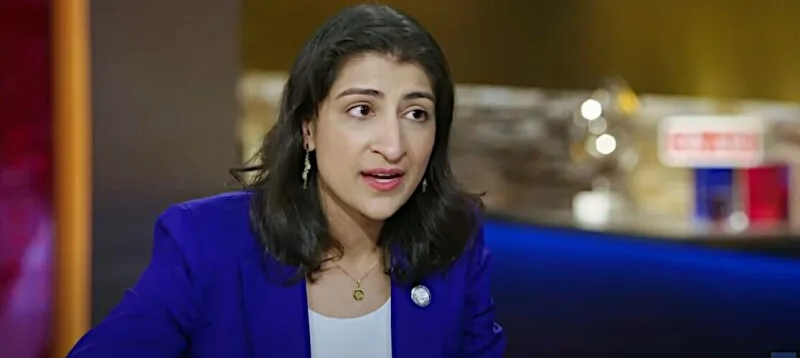
Former FTC chair Lina Khan wants the federal government to know that it doesn't need to wait for new laws to address AI threats.
There are already laws and regulations on the books, including a 92-year-old Supreme Court precedent, that she argues could be used to hold AI companies and, in some circumstances, their executives accountable for their actions.
Khan’s comments on X Sunday follow a flurry of activity from the leadership of OpenAI, Anthropic, Microsoft, and xAI aimed at doing what can only be described as trying to corner regulators into giving them their way.
The former Biden administration trust buster pointed to numerous examples of current laws, and prior precedent, that could be used to hold frontier labs to account, even if they’re currently doing all in their power to change the conversation.
“We shouldn’t let discussions about new legal regimes distract from the fact that there’s no AI exemption from laws already on the books,” Khan said.
“Law enforcers already have authority to charge companies and their CEOs for creating and releasing dangerous, unvetted, or defective products.” As one example, Khan points to laws governing dangerous and defective products as an avenue to prosecute AI leaders.
She notes that the release of unvetted models or agents can violate consumer protection laws, and that shipping tools “without implementing adequate measures to detect and stop rogue or defective AI agents” could be prosecuted under rules governing unfair and deceptive trade practices.
Particularly timely, Khan also pointed to existing laws prohibiting unfair methods of competition.
This, she notes, includes cases “where firms pursue dangerous behavior, aware that doing so may compel rivals to do the same.” There’s no leap needed to understand what Khan’s talking about here.
OpenAI’s agents broke out of their intended sandbox and gained unauthorized access to Hugging Face systems - conduct that could raise serious criminal-law questions if carried out knowingly by a human.
After doing some digging to look at its own agents' behaviors, Anthropic has essentially copped to similar activities that would be criminal if a meatbag was behind the keyboard instead of a simulated silicon brain.
OpenAI’s agents have since been identified as the culprits in other misuses of online assets that, again, would be crimes were they perpetrated by a human.
Khan points to a 1934 US Supreme Court decision to argue that the current battle between American frontier labs, which has put parts of the internet in the firing line of agents that escaped their intended constraints, could amount to an unfair method of competition if companies feel compelled to take similar risks to keep up.
That decision, FTC v.
5News aggregated this summary from the outlet’s public feed. The full article, with all the context, is on www.theregister.com — the content belongs to The Register.