Copenhagen’s Next Course
Fifteen years after Noma taught the world to eat twigs, four Copenhagen nights take in Koan’s case for a third star, Radio’s August vegetables, PÆRE’s Blue Cheese Martini and Tivoli’s hand-braked rollercoaster.
On our first morning, Copenhagen offered petrichor, pastries and perfect coffee as bicycles ticked past. Minutes later we had passed a palace and watched pedestrians await green lights despite empty roads. The streets looked as if litter required planning permission, though 14 of 40 fountains remained dry after two specialist staff resigned - an embarrassment measured in empty basins. Those basins were conspicuous precisely because almost everything around them worked.
Noma reopened a fortnight before we arrived under executive head chef Pablo Soto, with René Redzepi returning as creative director rather than daily operator after renewed scrutiny of the restaurant’s working culture. Yet Copenhagen no longer needs one restaurant - or one chef - to speak for it.
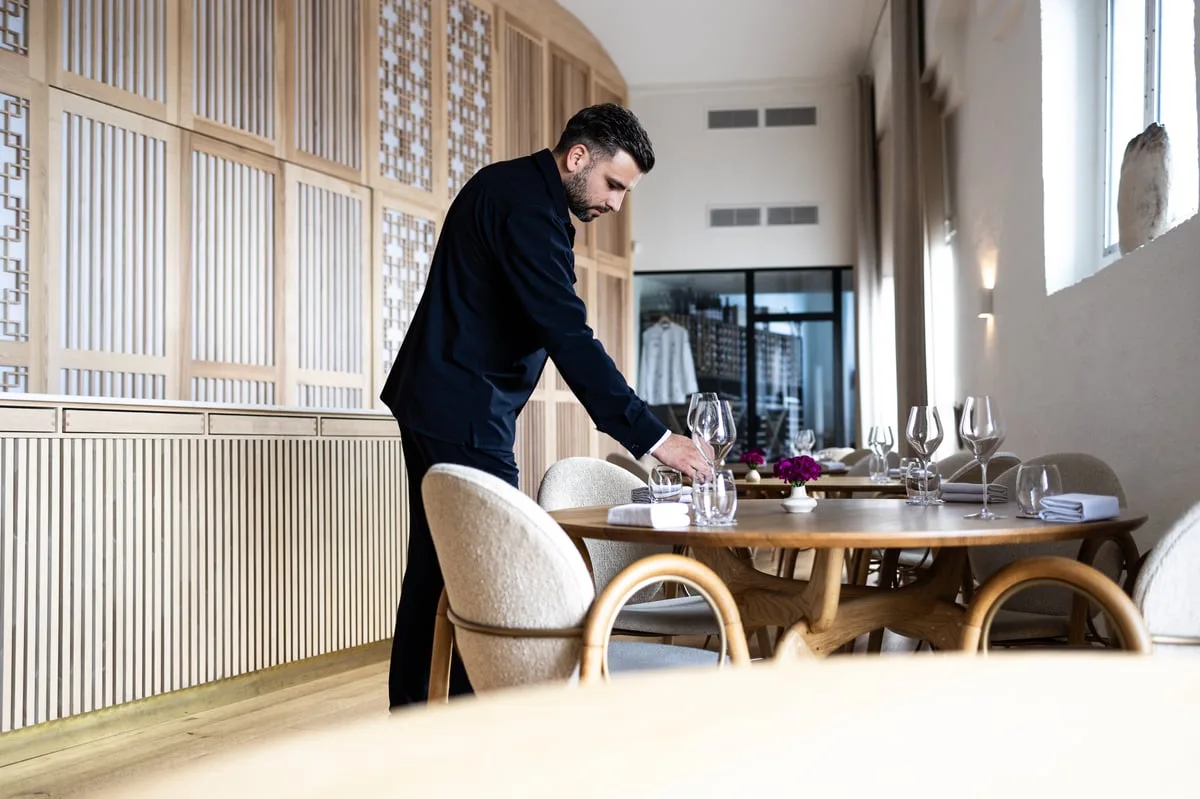
Koan Neve Qaraday Koan: the case for a third star Koan was our first dinner. The dining room turns its back on the waterfront and towards the pass and sommelier station. Nearby, a block of Korean granite, given by Korean veterans, honours Jutlandia, Denmark’s hospital ship during the Korean War. Two stars were on the door; three-star cooking was on the table.
The restaurant began as a pop-up at Empirical Spirits in 2020, then opened permanently here in April 2023. Ten weeks later, Michelin awarded it two stars.
Born in Seoul and adopted by Danish parents, chef-patron Kristian Baumann trained at Noma, Manfreds and Relæ, and helped launch Noma Japan. When Redzepi took Noma to Australia, Baumann occupied its Copenhagen kitchen with 108; Michelin arrived six months later. A first research trip to South Korea in 2017, followed by regular returns, helped turn curiosity into a language. Koan cooks in the charged interval between birthplace and upbringing.
Service was balletic, though nobody asked us to admire the footwork. Jeff Njoroge Njehu guided us through 18 courses without making dinner sound like coursework. Hand-peeled raw shrimps, poached oyster and scallop led to acorn, white kimchi and silken tofu with caviar. The white-kimchi flower arrived in a ‘Reborn’ bowl by Korean artist Lee Ki-jo, made with fragments of Ming and Qing porcelain. Broken material returned in another form.
Chilled lobster noodles, kkwabaegi, summer salad and plump langoustine followed. The menu’s spare nouns withheld the plot until each dish arrived. Gamasot rice with forensically displayed accompaniments yielded to its caramelised base before a Korean-accented run of sweets.
Head sommelier Lasse Peder Nielsen’s pairing refused a single compass. Yunguna, an experimental Copenhagen rice winery, supplied takju - cloudy, unfiltered Korean rice wine - and yakju, its clear counterpart. Fourrier Gevrey-Chambertin Premier Cru Cherbaudes 2019 brought Burgundy into the middle. Mas Amiel Maury Rouge 1985 emerged from a demijohn through an implement which looked disconcertingly equipped to inseminate cattle.
5News aggregated this summary from the outlet’s public feed. The full article, with all the context, is on www.standard.co.uk — the content belongs to Evening Standard.