Captured Ukrainian-born soldiers tell BBC why they fought for Russia
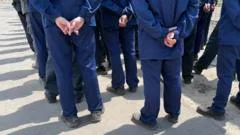
In Western Ukraine, behind high walls and layers of locked gates, there is a camp full of men captured fighting for Russia.
Many of those crouching in the shade around the edges of the prison yard were recruited from big cities like St Petersburg and Yekaterinburg, not far-flung and poorer regions like at the start of the full-scale invasion.
Amongst them are soldiers from Ukraine itself: the men who went to war with their own country.
Interviewing prisoners of war is not straightforward: to be sure they are not being coerced, first and foremost, and then to assess how openly they are speaking in the circumstances.
But with no access to the military inside Russia, it is a chance to assess the dynamics of this war and explore what might motivate the men fighting it. That includes the Ukrainian-born soldiers, on Russia's side.
We gave everyone the right to refuse an interview and spoke to those who agreed far away from any guards, and without cameras. As well as several formal interviews, I was able to talk to prisoners directly, in Russian, in several locations.
Anton was 10 when his part of Ukraine's eastern Donbas region was taken over by forces loyal to Moscow.
In 2022, when Vladimir Putin escalated to all-out war, he turned 18 and signed up to fight immediately - for Russia.
"I don't regret my choice. I went to defend my land," Anton insists and tells me his friends volunteered, too. "Then you get the SMS messages. Dead, dead, dead."
Other prisoners say the same: that all those they went to war with have been killed.
They also say fewer people are volunteering to replace them, despite enormous sign-up fees, which suggests Putin's desire to avoid mass mobilisation could soon be tested.
When Ukraine captures its own citizens on the battlefield, they are put on trial for treason.
Officially, Kyiv still sees them as Ukrainian and treats Russia's control of their regions as temporary. But the reality on the ground is more complex.
"They're very pro-Russian, and their national identity is very blurred," is how Petro Yatsenko from Ukraine's coordination headquarters for PoWs puts it.
5News aggregated this summary from the outlet’s public feed. The full article, with all the context, is on www.bbc.co.uk — the content belongs to BBC News World.