How the quirky puffin became a symbol of the climate crisis – and hope
In an extract from his new book, the nature historian explains how technology could help the seabird survive
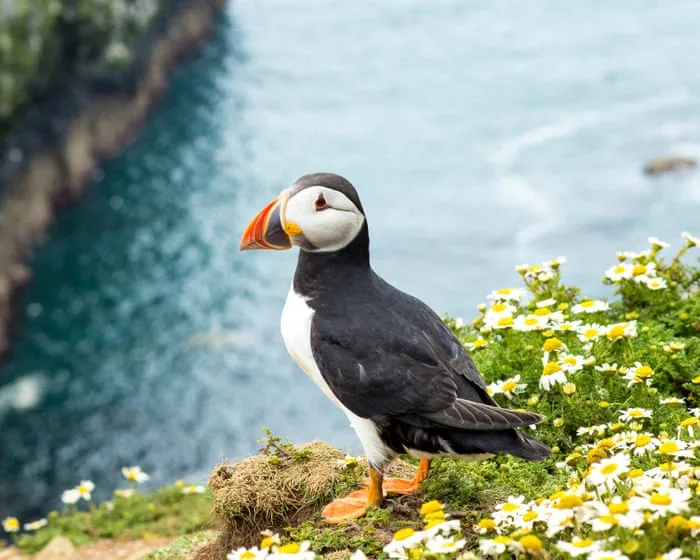
F or centuries human beings have exploited puffins, harvesting them by the thousand on their breeding grounds for their food and feathers. Over time, though, this relationship has changed, so that today we have come to love them, celebrating their quirky character and comical appearance and giving them a central place in our affections – a journey described by the environmental historian Dr Rob Lambert as the shift “from use to delight”.
How ironic, then, that just as we have come to truly appreciate them, our own existence now threatens theirs. The climate crisis threatens almost all the world’s roughly 11,000 species of birds, but its consequences have particularly dire significance for seabirds, whose life cycle is so intimately connected to the timing and abundance of their food supplies.
Warming oceans result in fish such as sand eels shifting their range into cooler waters, and thus either declining or disappearing from the seas around seabird breeding colonies. If puffins need to travel further to their feeding areas, or take longer to find and catch food once they get there, then their chicks have a lower chance of fledging.
Even if they do, they are less likely to survive the following winter. Our changing climate has already led to an increase in the frequency and severity of extreme weather events such as autumn and winter storms, which leads to a higher mortality of birds outside the breeding season.
It is often forgotten that the climate crisis is not the only negative factor affecting these birds’ lives. As we have seen, increased marine pollution, especially from oil and plastic, along with less severe yet still serious issues such as disturbance and predation, are already reducing the puffin’s breeding success at many once-thriving colonies.
The dire prediction that nine out of 10 puffins could disappear before the middle of this century is hopefully pessimistic, yet we do know that serious declines are already occurring.
In early 2026, BBC News reported that following that winter’s severe storms hundreds of dead and dying puffins, guillemots and razorbills had been washed up on beaches in Cornwall, Scotland and north-east England. Conservation organisations have also reported more than 20,000 stranded birds, mostly puffins, along the Atlantic coasts of France, Spain and Portugal.
Samuel Wrobel, the RSPB’s senior marine officer, noted that this was the worst wreck for over a decade, since the catastrophic events of winter 2013-14, and warned that “after the impact of avian flu this is the last thing our seabirds need”. Moreover, as most birds are likely to have died at sea, so will never be found, the true death toll is likely to be much higher.
Peter Harrison has spent his life watching, painting and studying seabirds, and has a special affection for the puffin.
5News aggregated this summary from the outlet’s public feed. The full article, with all the context, is on www.theguardian.com — the content belongs to The Guardian UK.