125 years of Meccano, iconic British toy that built generations of great minds
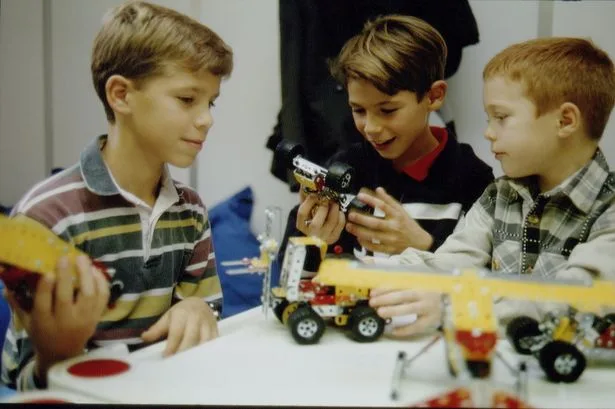
From a Nobel Prize winner to a Prime Minister with a smattering of inventors thrown in, during its 125 year history Meccano has had some very important fans. The metal model making toy, which can be used to build everything from cranes to ferris wheels and fighter jets, has sold more than a billion sets worldwide since its creation by Liverpool toymaker Frank Hornby in 1901.
Devised for his children at his kitchen table, its reusable metal parts, fastened with nuts and bolts, revolutionised hands-on, educational play - fostering spatial awareness and combining fun with a practical engineering lesson.
Originally launched as Mechanics Made Easy, the Meccano name - adopted in 1907 - is believed to derive from the term “make and know.” The world ’s first construction toy - joined by LEGO, created by Danish carpenter Ole Kirk Kristiansen in 1932 - it even helped the war effort.
In 1914 Meccano’s Binns Road factory opened in Liverpool - and a vibrant international community was created through the launch of Meccano Magazine in 1916. The Meccano Guild was established in 1919, to connect local enthusiast clubs. And, in the 1920s, Hornby expanded into model railways, Dinky Toys die-cast miniatures, Kemex chemistry sets and Elektron electrical kits.
Sharon Brown, Curator of Land Transport, Work and Industry at the Museum of Liverpoo, says: “Facing early marketing struggles with Meccano, Hornby got a vital break when Professor Hele-Shaw of Liverpool University certified it as ‘based on sound engineering principles.’ The endorsement skyrocketed sales, turning Meccano into a popular prototyping tool for inventors and a foundational educational kit that sparked countless technical careers.”
Before World War Two, mathematicians at Manchester University constructed early analogue computers from Meccano, to solve complex equations. And when the government banned the manufacture of metal toys in February 1942, Meccano’s factory was redirected to wartime manufacturing production - the details of which have never been fully disclosed.
The firm also produced a popular die-cast Spitfire, donating the proceeds to the war effort. Meccano has been involved in other innovations, including computing, robotics, engineering, entertainment, automotive design and technological invention.
Sharon says: “Nobel prize winner Sir Harry Kroto linked his 1996 Chemistry Prize directly to playing with Meccano as a child, calling the loss of its popularity to LEGO a ‘disaster of modern life’.” Kroto said: "Meccano gave one an idea that there was an engineering explanation that could make the molecule so strong. You imagine building molecules as if they were bits of Meccano."
Elsewhere, Trevor Bayliss, inventor of the Freeplay radio in the early 1990s, took inspiration from his childhood Meccano sets. Sharon says: “He designed a wind-up mechanism that would operate the radio for 14-minutes on a single wind without the need for electricity or expensive batteries.
5News aggregated this summary from the outlet’s public feed. The full article, with all the context, is on www.mirror.co.uk — the content belongs to The Mirror UK News.