Wild dogs record 2,500-mile trek across Africa in search of a mate
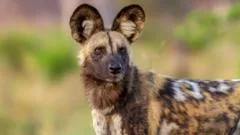
A pack of African wild dogs has completed a record-breaking 2,485-mile (4000km) journey across the continent.
Scientists say it is the furthest recorded distance for any African land mammal searching for a mate, offering hope that wildlife can travel across vast distances despite growing human pressures.
The three brothers zigzagged across Zambia, navigating a landscape increasingly shaped by people and avoiding obstacles including major cities.
However, other wild dogs tracked with GPS collars in the study died in illegal snares, underlining the dangers they face.
Three sisters almost completed an equally epic journey, but stopped when one became trapped in a snare.
African wild dogs are among Africa's rarest predators, with only about 6,000 remaining in the wild.
They live in highly social packs, hunt together and are known for their vast roaming in search of new territory and breeding opportunities with other packs.
They cannot breed within the pack they are born into, so they either wait and may eventually inherit their pack, or set off at the age of two or three in search of a mate.
The brothers covered about 260 miles in a straight line over the course of eight months, but travelled nearly 10 times that overall while crossing through a broken-up landscape.
These sorts of journeys are known as dispersals - travelling one way in search of a mate, which is a behaviour distinct from migrations, where animals move back and forth with the seasons in search of food or habitat.
The UN Convention on Migratory Species identifies Africa's longest migrations as wildebeest moving seasonally between Tanzania and Kenya in search of grazing and water covering more than 400 miles.
Globally, caribou undertake the longest single land migrations of any animal - travelling 839 miles in a round trip, while grey wolves have been recorded travelling more than 4,350 miles over a year.
Perhaps even more significant than the distance itself was the route the wild dogs took through Zambia.
They moved between wildlife strongholds, skirting areas containing major human obstacles, including the capital, Lusaka, and heavily developed industrial areas.
5News aggregated this summary from the outlet’s public feed. The full article, with all the context, is on www.bbc.co.uk — the content belongs to BBC News Science and Environment.