Making Iraq ‘normal’ again: do mass arrests and cash seizures signal end to corruption?
Government insiders say the new PM is unleashing an ‘earthquake’ to clean up the system. But Iraqis have heard it all before
The gates of the Green Zone in Baghdad are made of five-metre-high armoured steel, reinforced with horizontal girders, and strung between concrete pillars and anti-blast walls. Police water cannon trucks are stationed nearby, along with armoured personnel carriers and squads of heavily armed soldiers.
At the first sign of street protests – over failing electricity, unemployment or, more recently, the US-Israeli attacks on Iran – the gates are shut. X-shaped vehicle barriers, made from welded iron beams and mounted on wheels, sit ready at the roadside alongside coils of razor wire; both are slid across the street, sealing off the sprawling neighbourhood, home to the presidential palace, parliament, the prime minister’s office, the massive fortress-like US embassy, and other institutions, including the homes of scores of politicians and members of parliament.
When the gates are closed, traffic is diverted, creating monumental jams lasting for hours for most Baghdadis who lack the coveted Green Zone badges.
In the early hours of 28 June, the gates were shut, US-made Abrams tanks prowled through the streets, and black-clad counter-terrorism units fanned out across the area. Only this time, the measures were meant to prevent those inside from leaving, rather than to keep those outside from getting in.
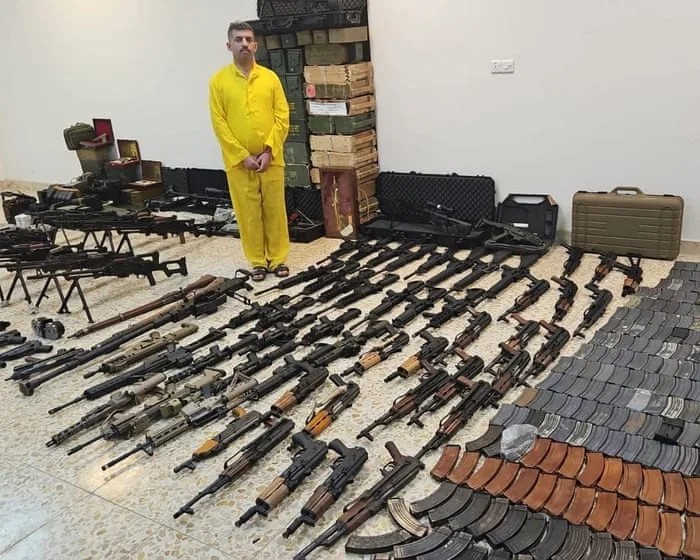
By dawn, Iraqis woke to the news that nearly 50 people, including a dozen MPs and senior officials, had been detained, along with the seizure of hundreds of millions of dollars in cash and gold. Pictures and videos, purporting to show masked officers hauling out safes full of money, piles of jewellery and suitcases filled with dollars, circulated widely.
The arrests were met with the greatest Iraqi schadenfreude since the beginning of time. For if Iraqis – of all persuasions, sects, ethnicities and social backgrounds – agree on one thing, it is the rottenness and corruption of the political parties that have held power since 2003, and the greed of a clique of party bosses, businessmen and militia leaders.
On the day of his inauguration as Iraq’s new prime minister in early May, Ali al-Zaidi, a 41-year-old with a round face, thin beard and sharp eyes, delivered, in stilted language riddled with grammatical mistakes, the standard repertoire of promises made by every prime minister before him, Iraq’s own version of making the country great again: supporting local industry, agriculture and youth; fixing the electricity supply and solving the housing crisis.
5News aggregated this summary from the outlet’s public feed. The full article, with all the context, is on www.theguardian.com — the content belongs to The Guardian UK.