Microsoft's Maia 300 swaps raw compute for a 2.5x memory bandwidth gain as it moves to make in-house silicon its main AI engine while claiming a 40% efficiency bump — could going the Google route be the pin that pops the Nvidia AI bubble?
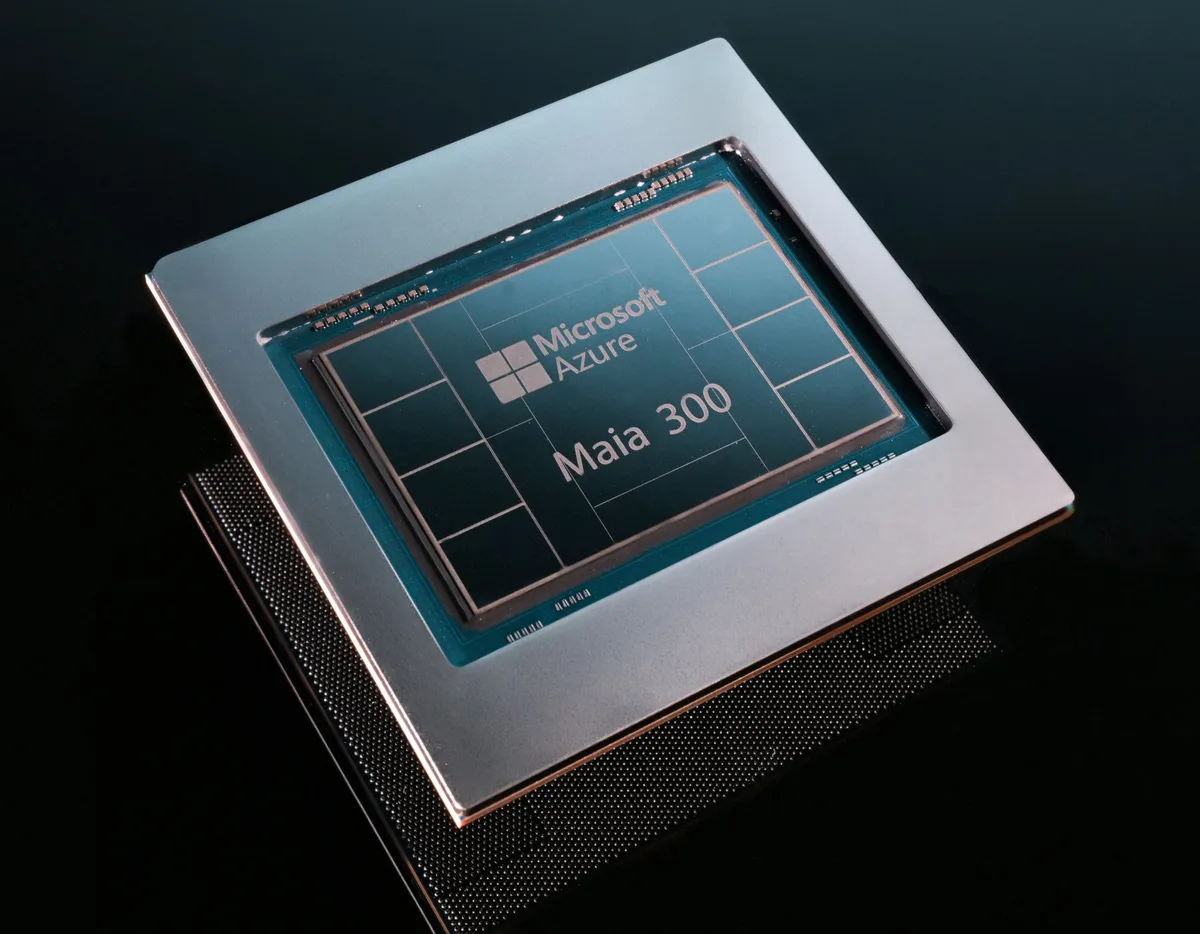
Microsoft will make Maia its main inference engine at multi-gigawatt scale, following Google and Amazon into in-house silicon Microsoft's upcoming Maia 300 trades a modest 36% compute gain for 2.5x Maia 200's memory bandwidth, betting on memory-bound decode, with production in 2027 Hyperscalers supply just over half of Nvidia's data center revenue at a 75% gross margin, so each move to in-house chips affects not only its pricing power but the chip industry's sustainability as a whole In 2024, Microsoft told the European Commission that Google was the only company vertically integrated at every AI layer, from chips to a mobile app store, and that "everybody else must rely on partnerships to innovate and compete." Now, it has revealed plans to follow the same route without breaking a sweat.
In an Official Microsoft Blog post , Scott Guthrie, executive vice president of Cloud + AI, said Microsoft will scale its Azure Maia accelerators to multi-gigawatt deployments starting in 2027 and make Maia the primary inference system for Microsoft's products and services.
The vehicle of its choice is Maia 300 , which Rani Borkar, president of Azure Hardware Systems and Infrastructure, and Saurabh Dighe, corporate vice president of systems planning and architecture, detail in an architecture deep dive .
Feeding the beast, not growing it, as it takes the Google route The move is a pointed statement from one of Nvidia's biggest customers, and it lands as bubble worries grow louder.
Gartner forecast this week that AI providers will spend nearly $1 trillion on infrastructure in 2026 alone, and that AI revenue won't cover the build-out profitably until at least 2032.
If the largest buyers of AI hardware stop paying Nvidia's margins for the work they do most, the most richly valued part of that build-out starts to look exposed.
Whether Maia 300 is the final catalyst for such a move, though, is a harder case to make.
Maia 300 moves from Maia 200's single die to a multi-chiplet package, with compute on TSMC's N2P process and memory-controller and I/O functions split onto separate dies.
Eight HBM4 stacks deliver 288GB at 18TB/s per accelerator, against 216GB at 7.1TB/s for Maia 200, according to StorageReview's breakdown of Microsoft's spec sheet.
Microsoft hasn't abandoned compute so much as rebalanced around memory.
In decode, the token-by-token phase that dominates long reasoning chains and agent loops, accelerators spend much of their time waiting on data rather than doing arithmetic.
5News aggregated this summary from the outlet’s public feed. The full article, with all the context, is on www.techradar.com — the content belongs to TechRadar.