Fossilized 10,000-year-old mastodon tooth found by California scientist
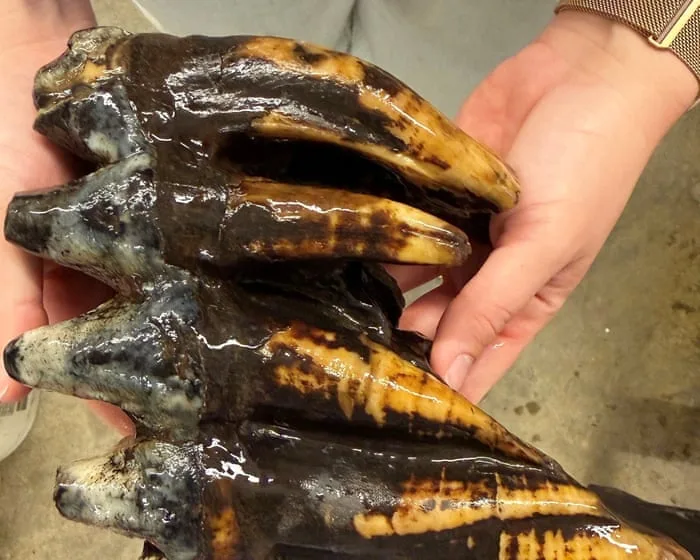
Molar from large mammal that once lived in North America is in ‘immaculate condition’ after discovery in Bay Area
A 10,000 year-old tooth in remarkable condition from an ancient Pacific mastodon, a large mammal that once inhabited North America, was recently discovered by a California scientist.
Brigid Lynch, a geomorphologist, was working at a preserve in San Mateo county, when she stumbled across a peculiar rock.
Paleontologists later confirmed it was not a stone, but an adult Pacific mastodon molar, according to a Wednesday news release from the Midpeninsula regional open space district (Midpen).
“The tooth itself is in immaculate condition. It’s the most complete mastodon molar from our area, and the most spectacular mastodon molar that I’ve ever seen. I had chills and shivers up and down my spine,” said paleontologist Wayne Thompson in a statement. “It’s another puzzle in the Ice Age saga that we can put into place.”
The pacific mastodon, related to modern-day elephants, were most prominent in the American west including what is now California , Oregon, the northern Rocky Mountain region and parts of Mexico. The herbivore mammal, which dates back about 2.5m years ago in North America, went extinct more than 10,000 years ago due to the climate crisis’s effects on their habitat coupled with overhunting from humans.
The fossilized tooth has been donated to Stanford University, where researchers at the school of sustainability will employ carbon dating to determine the molar’s exact age, according to Midpen.
“Fossils are our only opportunity to see into past biodiversity,” said Christine Garcia, a curator and manager of the geoscience specimen collection at Stanford.
“We can study fossils to better understand Earth’s past, past wildlife and the ecosystem they were a part of, and to help us make better predictions and better decisions about how to help our ecosystems and biodiversity thrive into the future.”
In 2024, a New York state resident found a mastodon jaw under the surface of their lawn. A year prior to that, a woman stumbled across a foot-long ancient mastodon tooth sticking out of the sand on a beach near California’s central coast.
5News aggregated this summary from the outlet’s public feed. The full article, with all the context, is on www.theguardian.com — the content belongs to The Guardian Science.