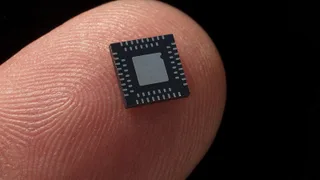
Android users beware — if you own one of these budget smartphones, your device could be hacked with a simple video call

Unisoc system-on-chip (SoC) devices – usually budget smartphones – are vulnerable to a video call-based exploit Any smartphone can be used to place the call, with malicious code sent in call setup messages Despite attempts, Unisoc did not respond to the disclosure Security researchers have demonstrated a weakness in several Unisoc SoC-based devices that makes them vulnerable to an exploit sent during a video call.
The exploit can deliver root access of the target device to the attacker, placing them in full control of the handset.
The vulnerability is in the firmware running on several Unisoc SoCs, each of which are used in budget smartphones, including models from Xiaomi, Motorola, and Realme.
A successful attack can be used to alter an Android device’s operating system, but the proof-of-concept was tested on a controlled network rather than a carrier network.
Additionally, the devices involved were rooted.
Consequently, the attack may not have real-world implications.
Which phones are affected? While you may not know the name Unisoc, it is a big player in the chip business, sitting fourth behind MediaTek, Qualcomm, and Apple.
Its chips appear in IoT and smart home devices, as well as mobile technology, typically for well-known companies including Samsung and Motorola.
The researcher who uncovered the vulnerability is known only by the alias 0x50594d.
They tested the exploit on three models: • Realme C33 • Xiaomi Redmi A5 (with security patch level 2026-01-01) • Motorola E13 (running security patch level 2025-02-01) In addition, the phones were installed with the July 2025 Android security update.
The advisory indicates that the flaw is in the modem firmware of four Unisoc SoCs.
These are the T612, T616, T606, and T7250, which means any phone using those SoCs is potentially at risk.
However, it is important to note that the vulnerability was exploited in specific conditions.
Improper Isolation The phones used in testing the exploit were all rooted, a process that makes devices prone to malware.
5News aggregated this summary from the outlet’s public feed. The full article, with all the context, is on www.techradar.com — the content belongs to TechRadar.